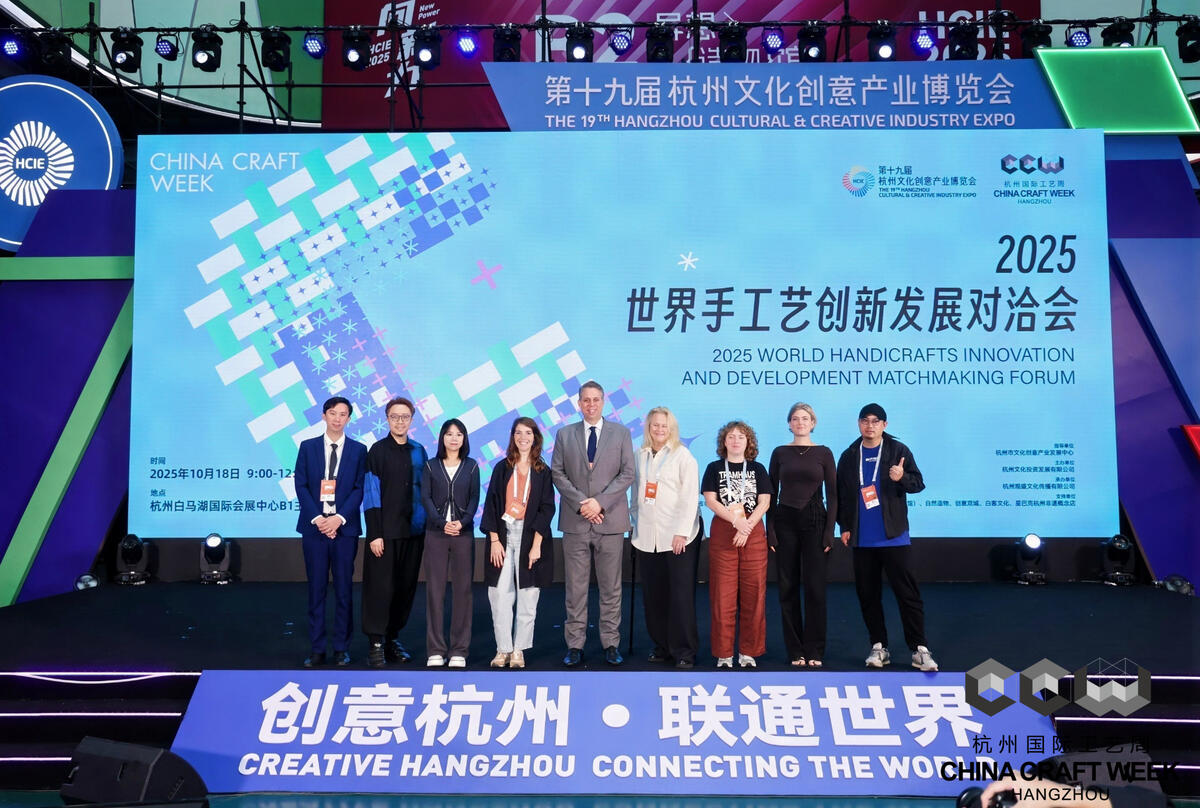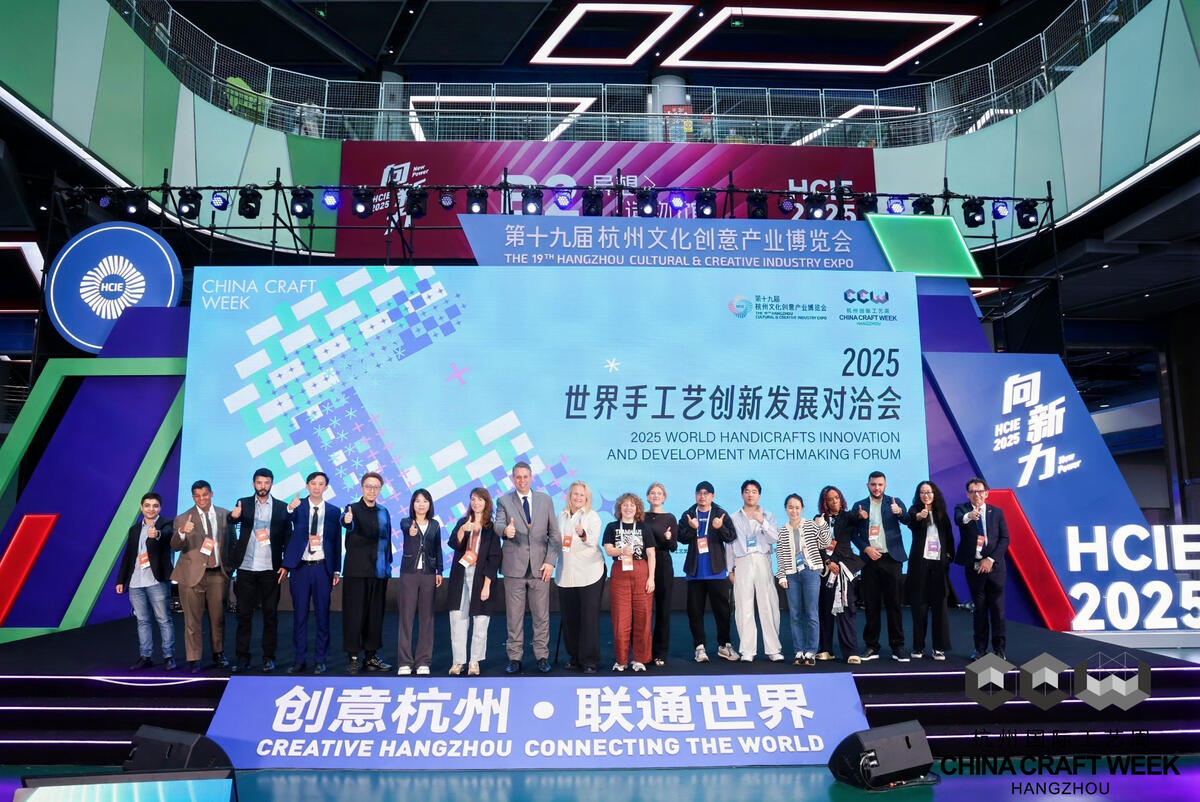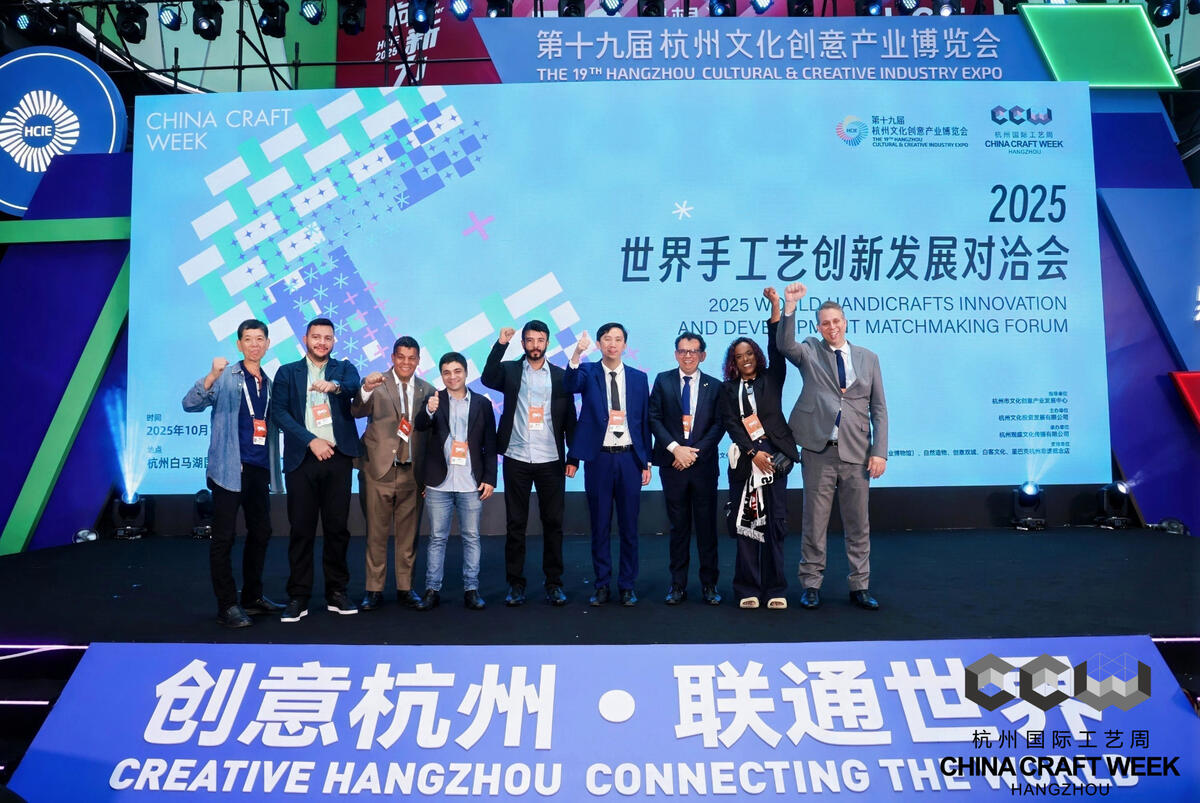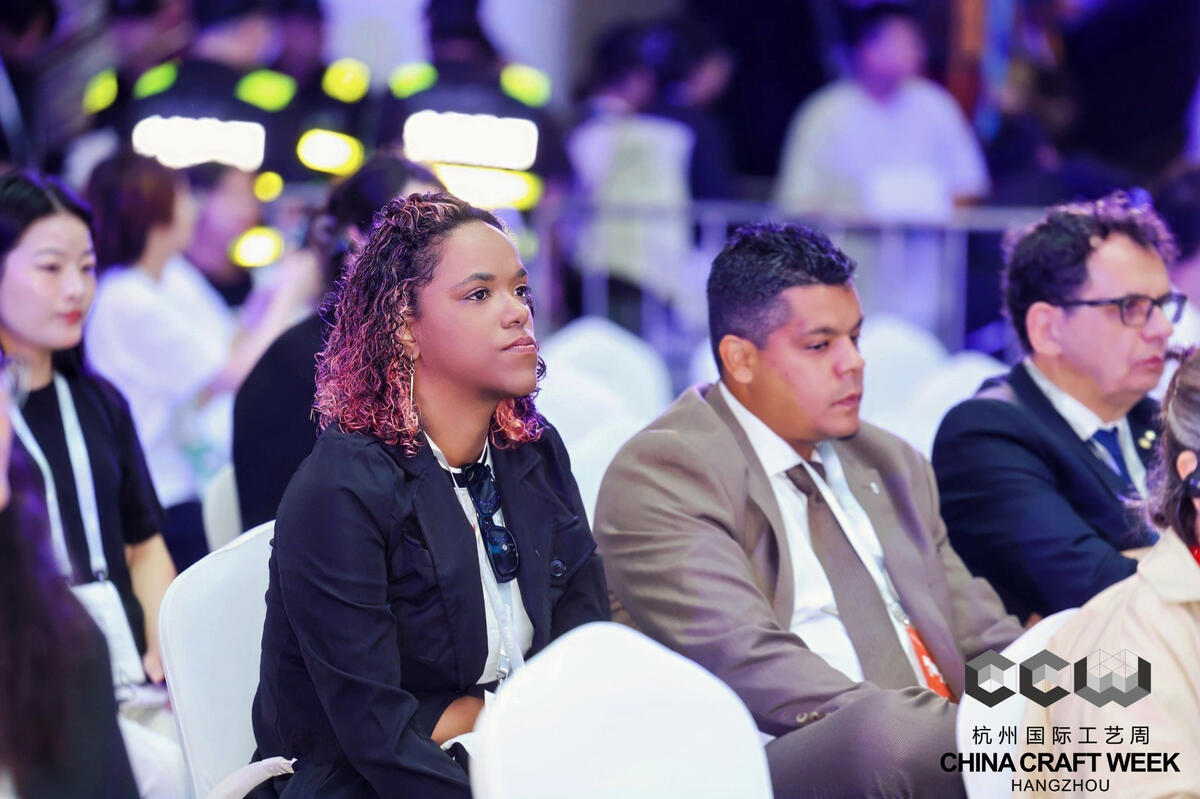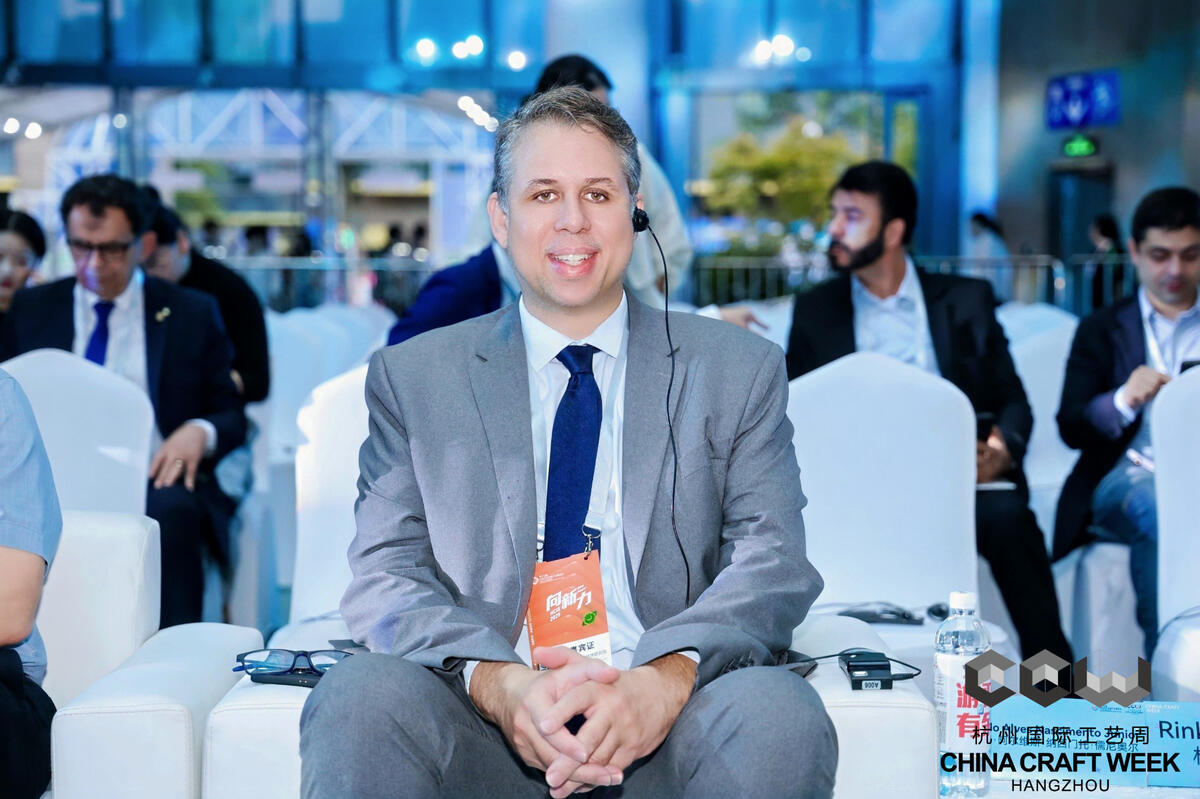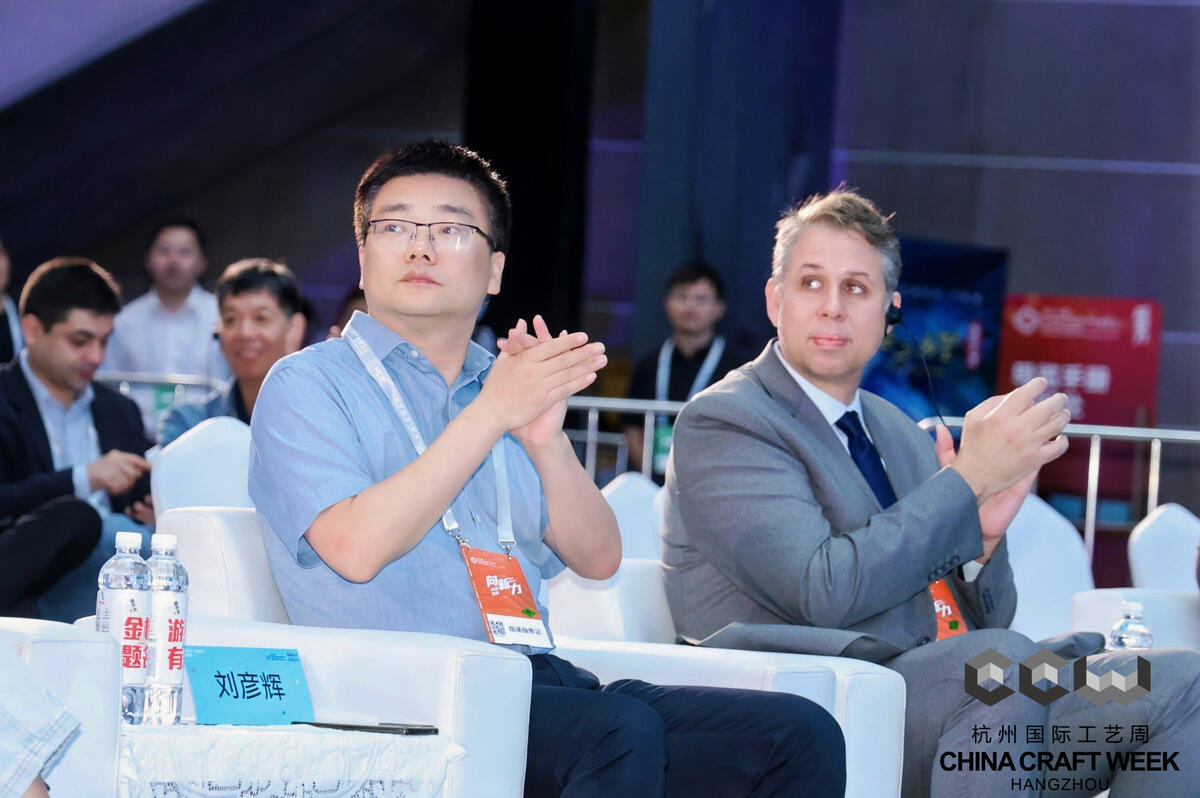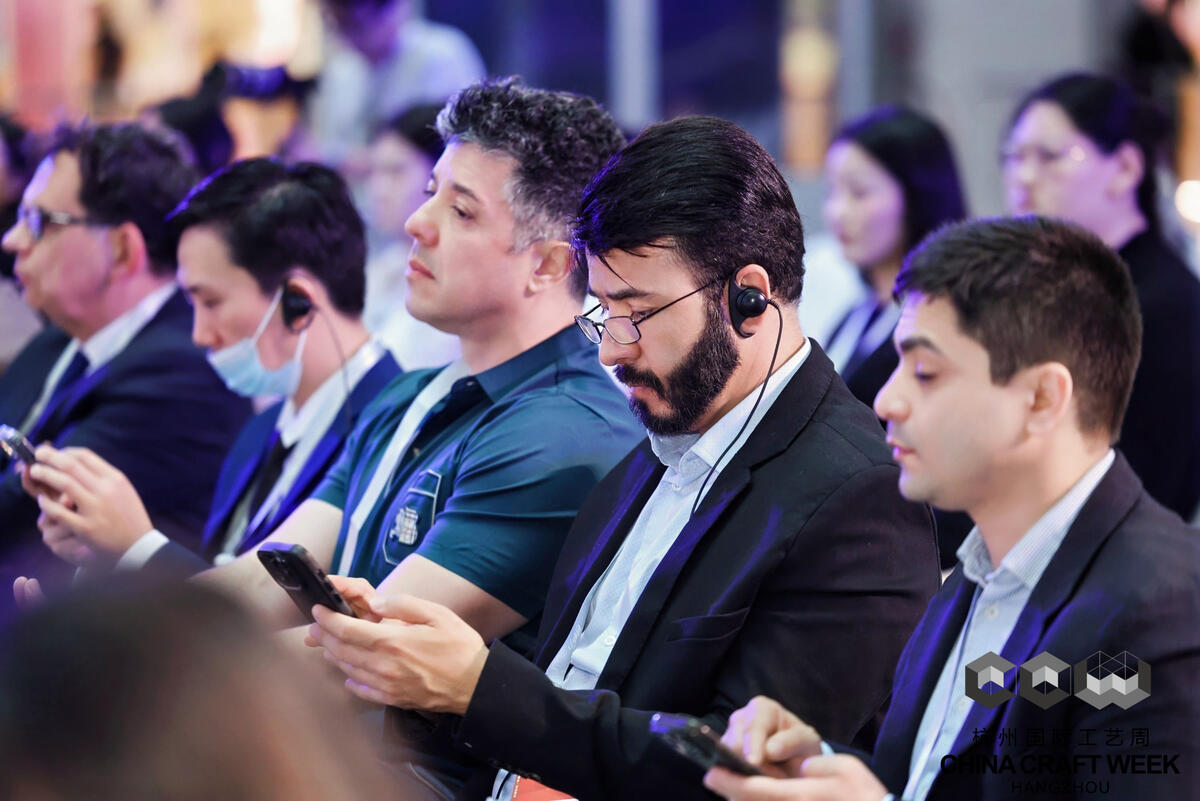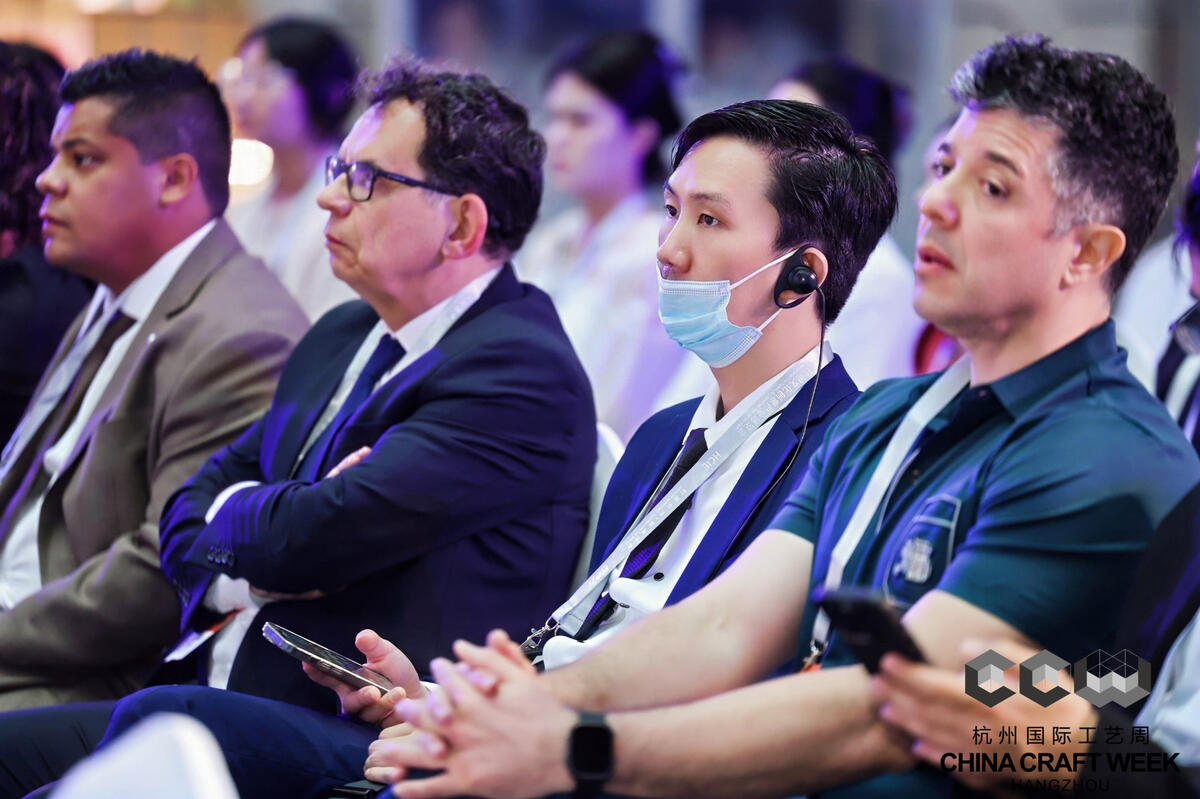
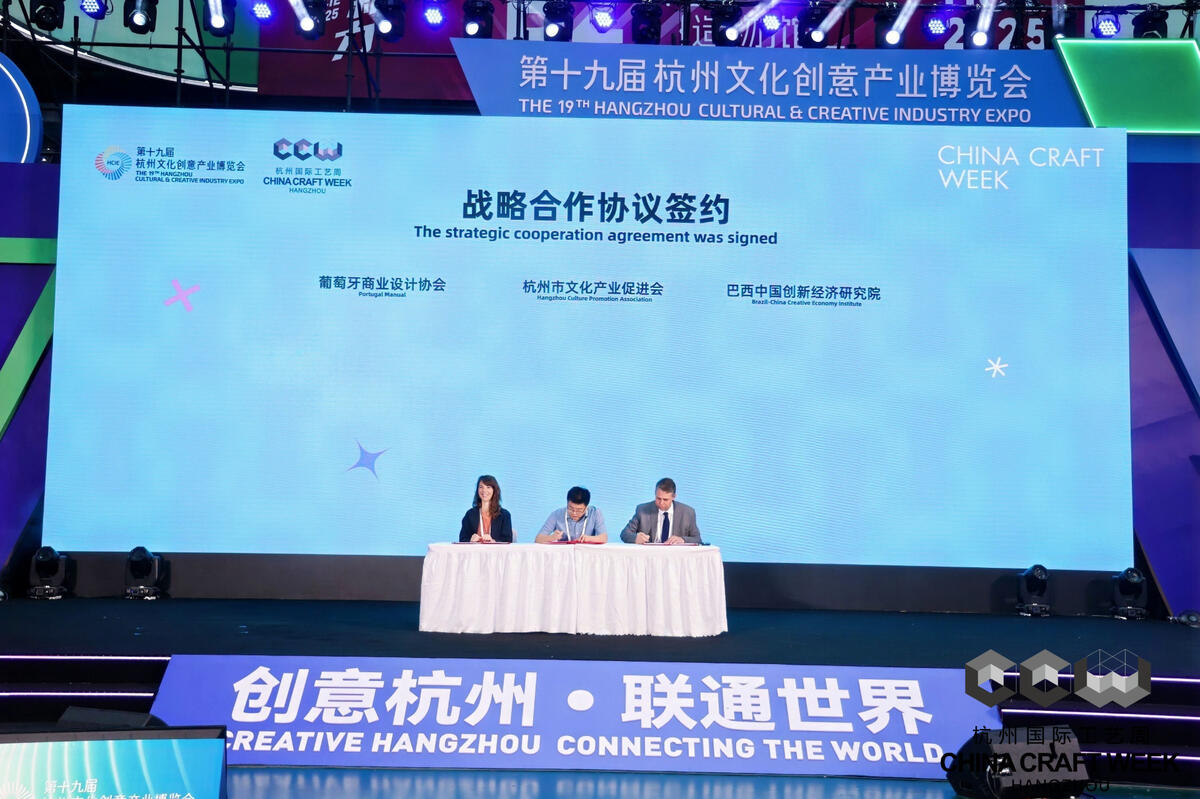
Hangzhou, China — October 17–20, 2025. On the stage of the Hangzhou Cultural & Creative Industry Expo pavilion (China Craft Week), the Brazil-China Creative Economy Institute (IECBC) signed a Memorandum of Understanding (MoU) with the Hangzhou Culture Promotion Association, opening new fronts of cooperation in cultural exchange, creative economy, bilateral events and connections between innovation ecosystems.
It was Brazil's first participation with its own booth and official delegation at the fair — an edition that brought together 600+ brands from 68 countries — and presented to the public the themed space "Carnival and Football."
**Signing and context**
The signing was carried out by Paulo Alves Nascimento Junior, IECBC director (representing president Cláudia Jannuzzi), and the director of the Hangzhou Culture Promotion Association. On the same stage, Filipa Belo, from the Portugal Manual initiative, formalized the signing of her own MoU, reinforcing the bond with Portugal and the Lusophone community.
**What the MoU provides**
• Programming and artistic exchange: exhibitions, concerts, workshops and creative residencies;
• Bilateral events and technical/business missions;
• Training and applied research, with sharing of best practices and co-publications;
• Promotion of territorial brands and impact projects in creative economy;
• Production of bilingual content and coordinated communication actions.
**Who was present**
Brazilian delegation (leadership and positions):
• Su Ziliang — secretary-general of the Sino-Brazilian Friendship Association, Chinese Cultural Association of RJ and IECBC (delegation leadership)
• Paulo Alves Nascimento Junior — IECBC
• Leandro Araújo — vice president of the FCCE Security Council
• Fellipy Muniz — communications director of Nova Jornada Intercultural Center
• Rodrigo D'Eça — CEO of Nova Jornada Business Hub
• Sandro de Pádua — CEO and founder of Lojas Fluzão
• Wu Shaoping — member of the Chinese community in RJ and delegation interpreter
RJ Legislature (three levels present):
• Federal Deputy Reimont Otoni — Chamber of Deputies
• State Deputy Dani Monteiro — ALERJ
• Councilor Leonel de Esquerda — Rio de Janeiro City Council
**Why it matters**
The agreement expands the international visibility of the creative ecosystem of Rio de Janeiro and Brazil, shortens distances between cultural agents, universities, brands and local governments, and creates a permanent path for joint projects between Brazil and China, with expected results in artist circulation, training projects and innovation activities.