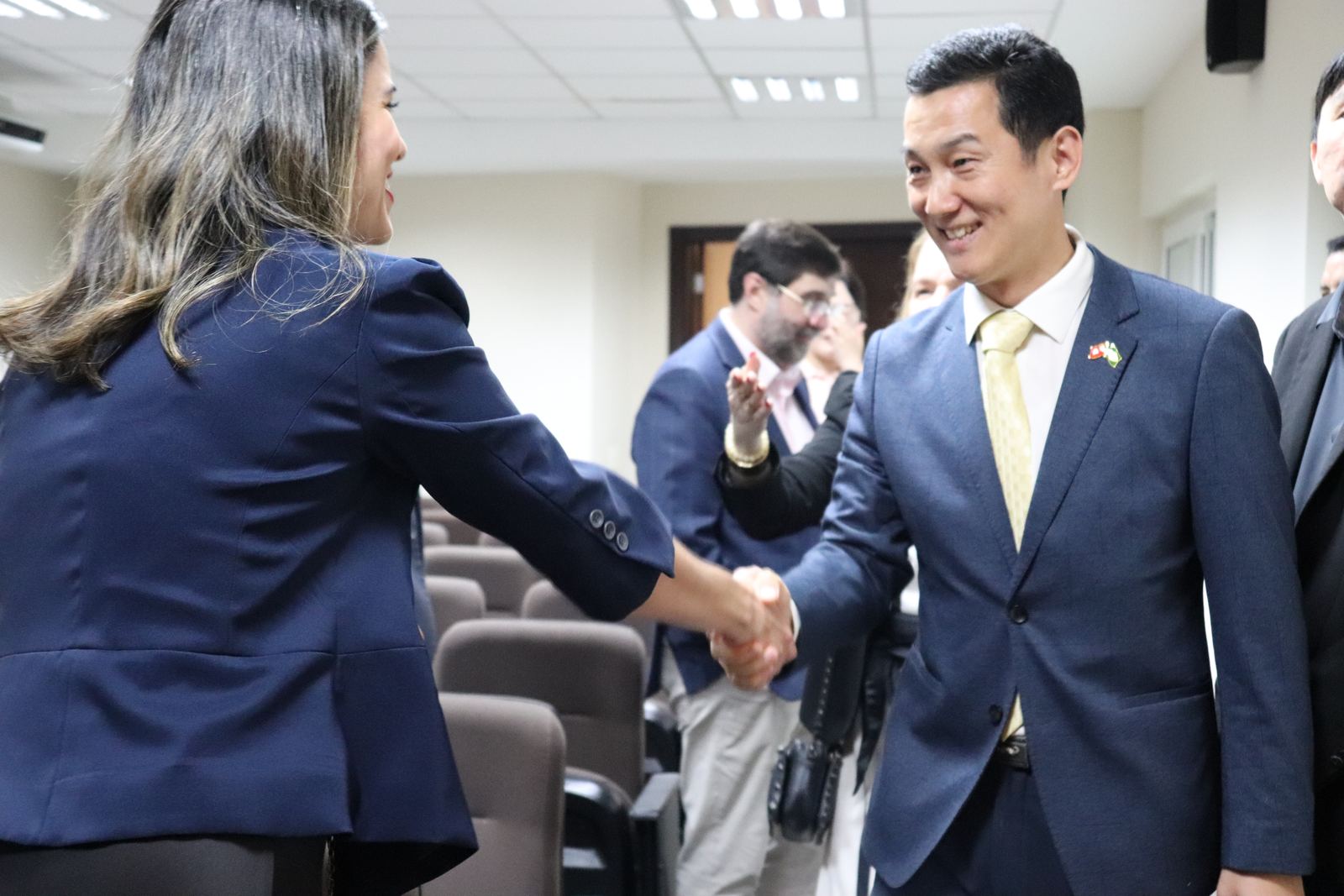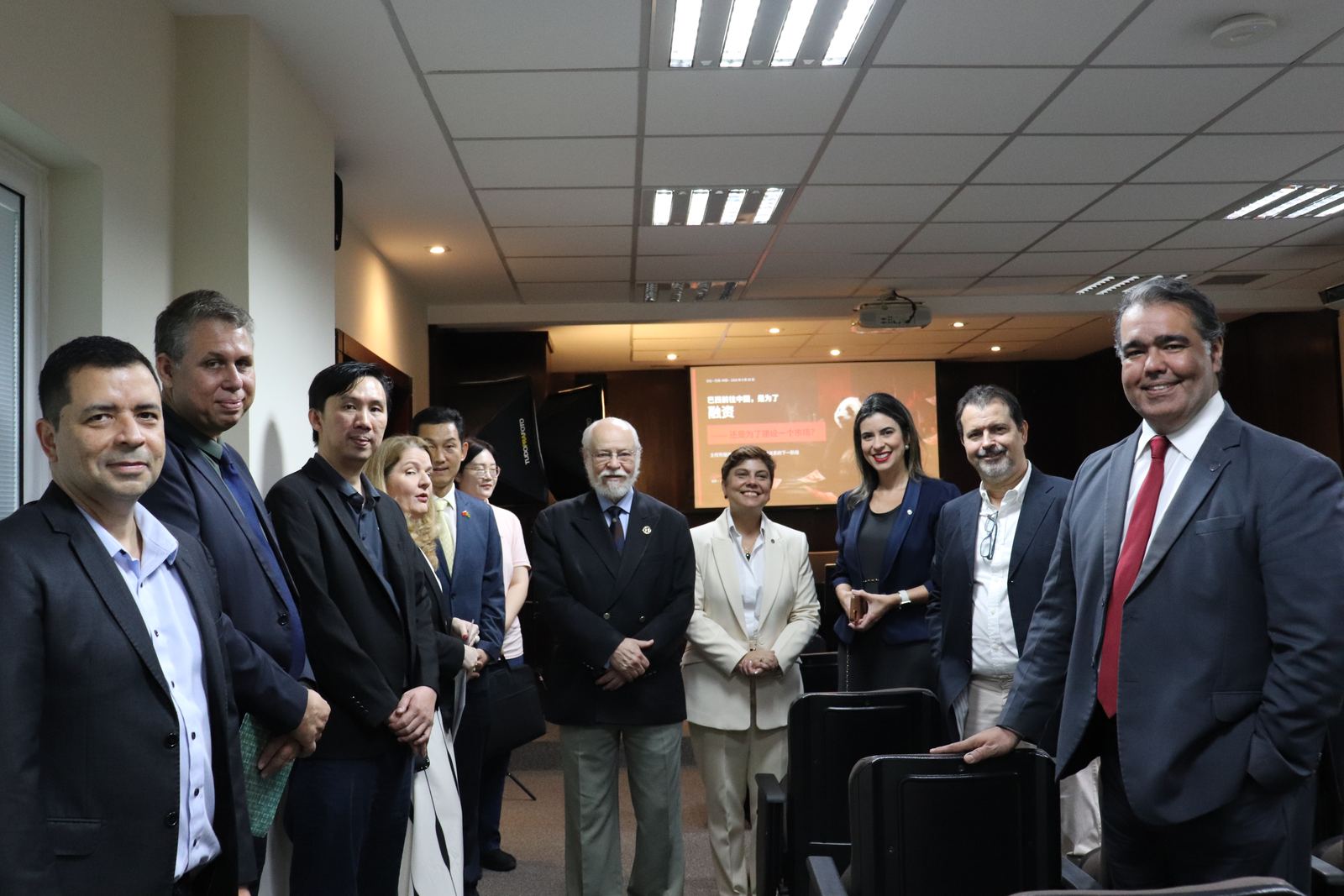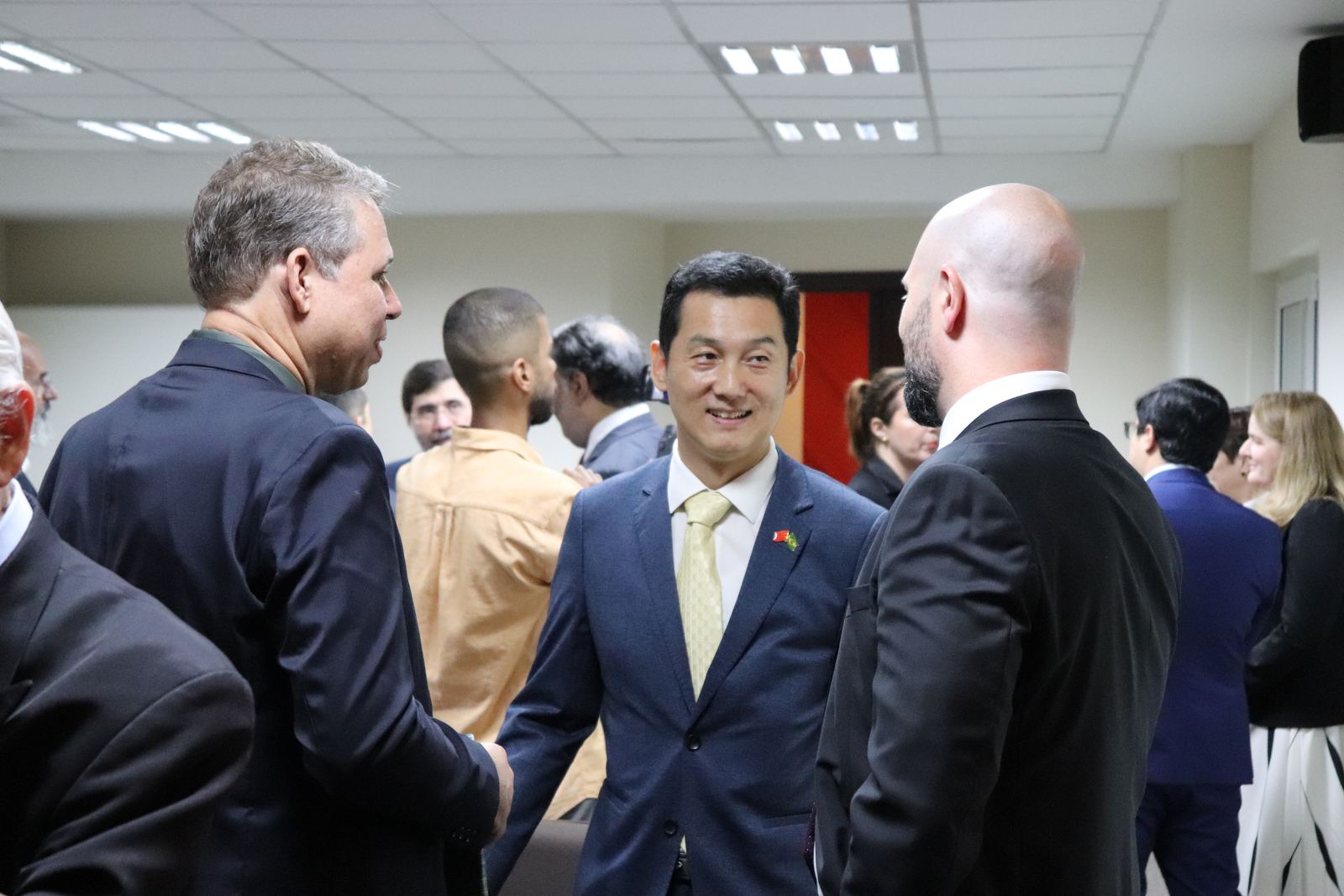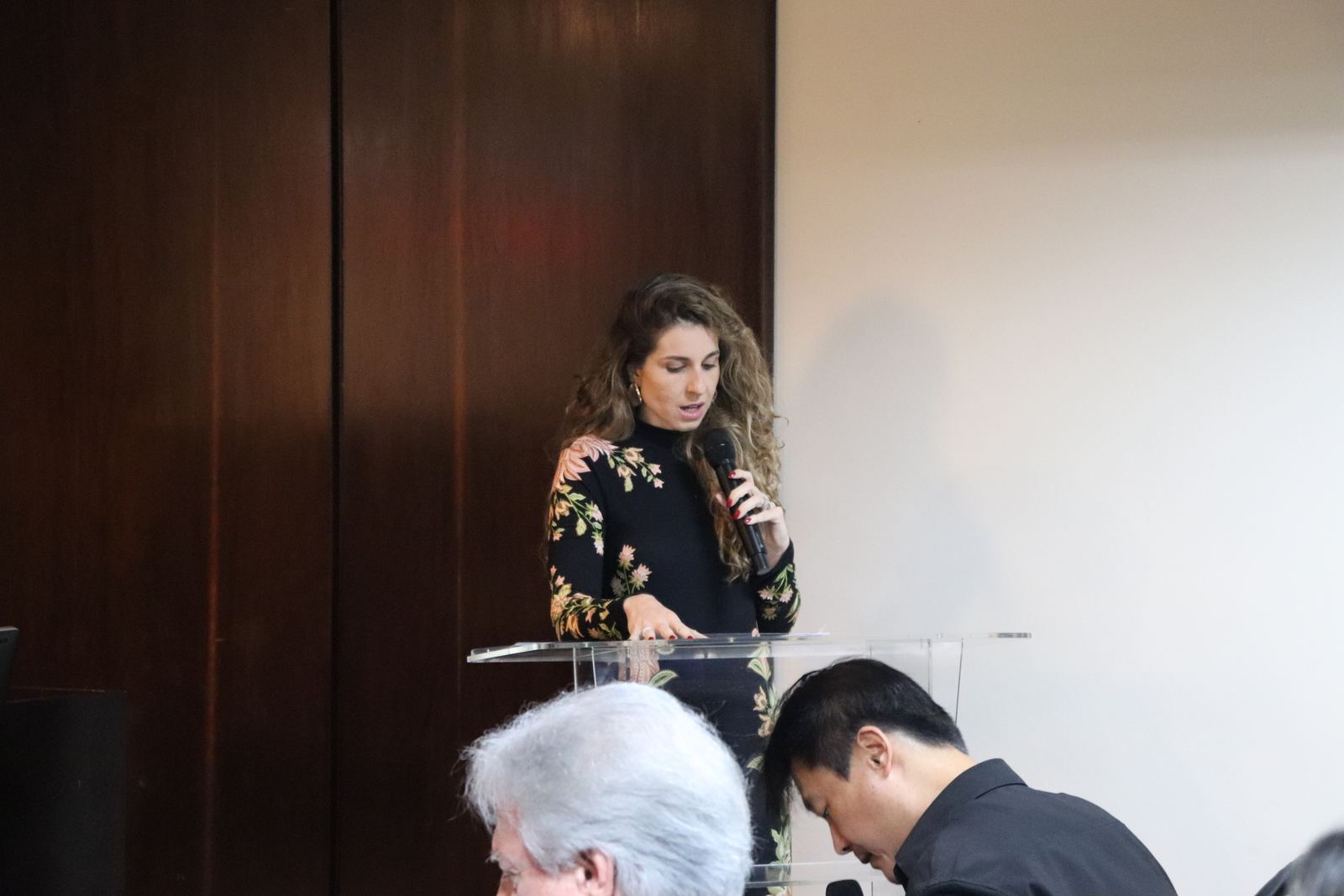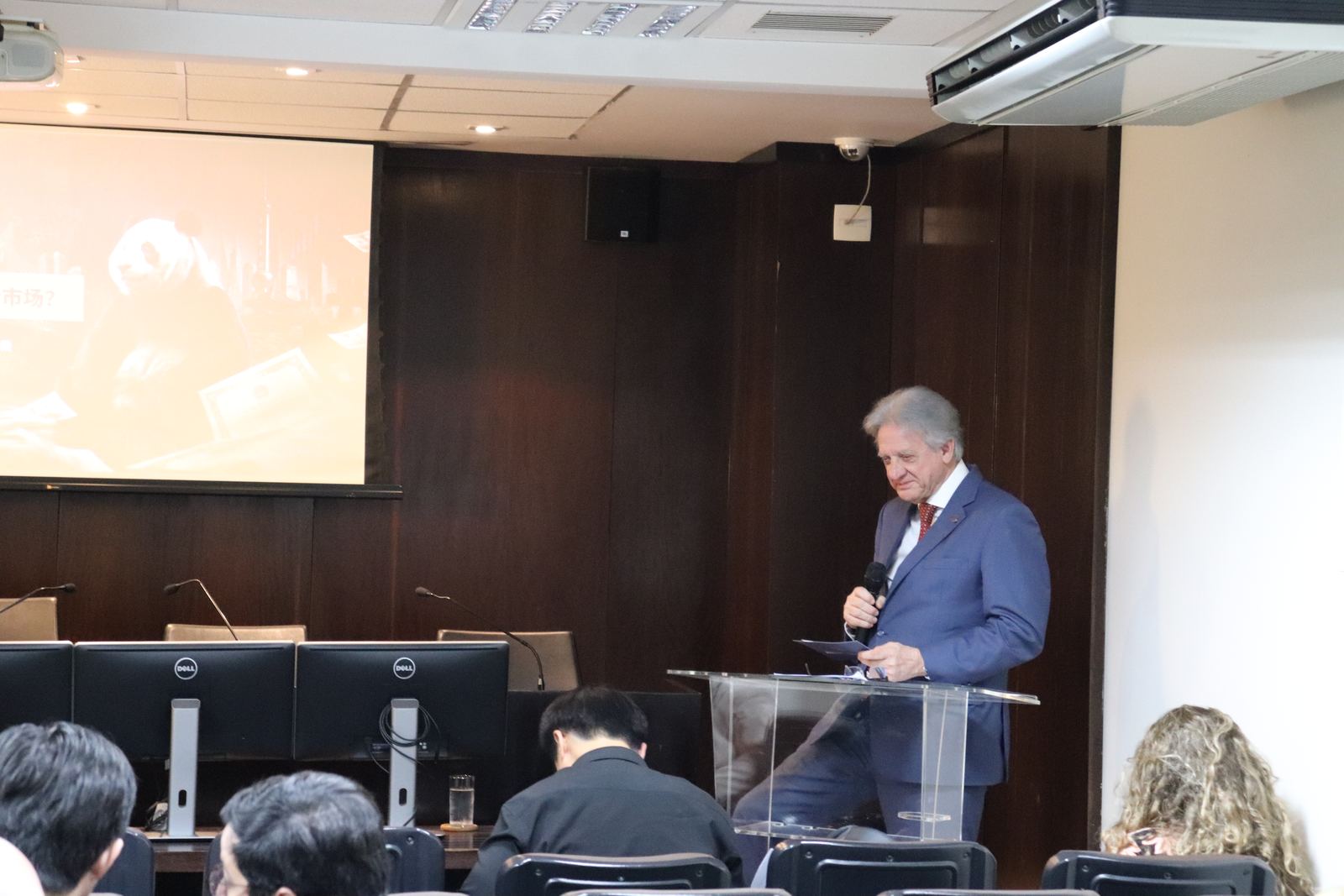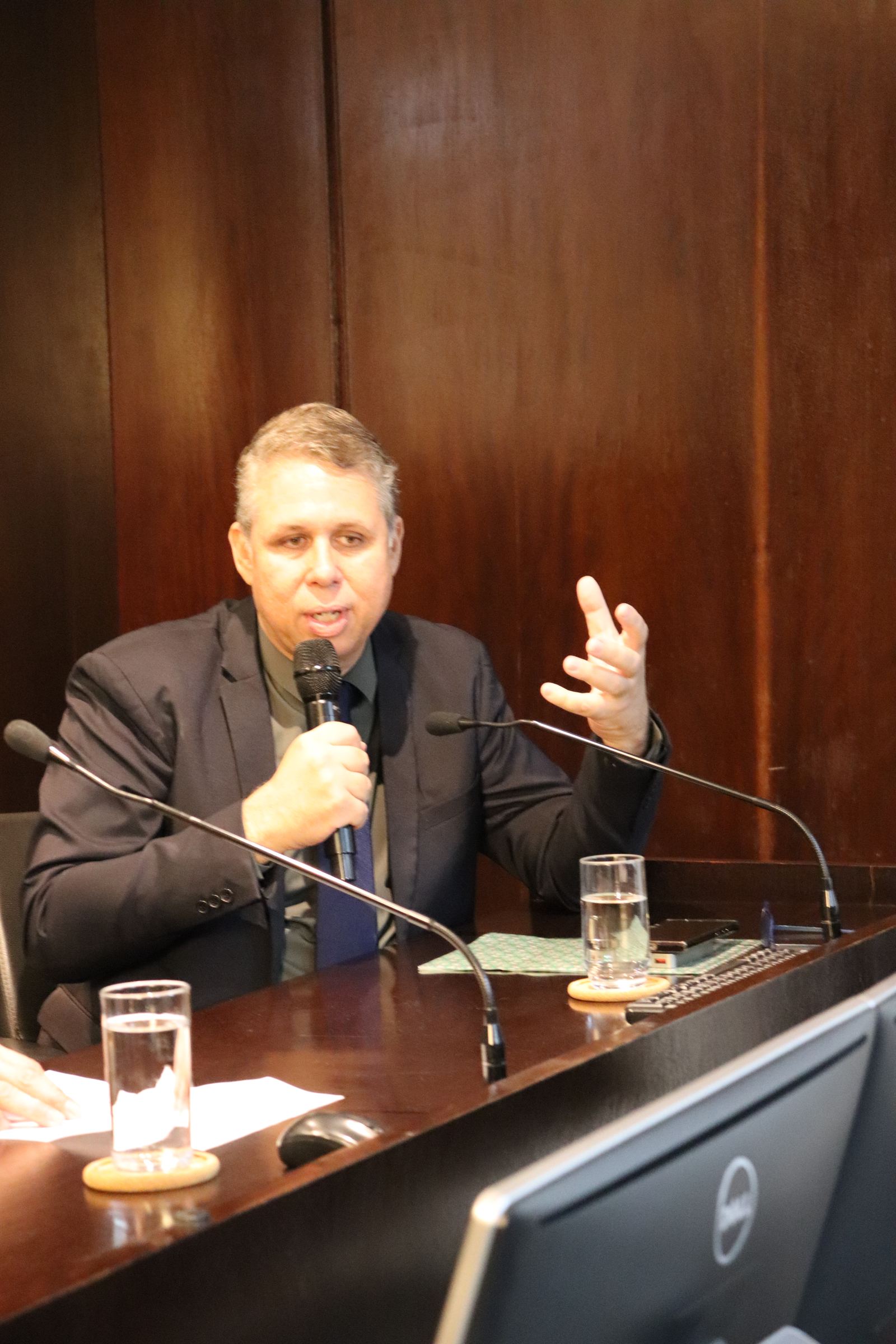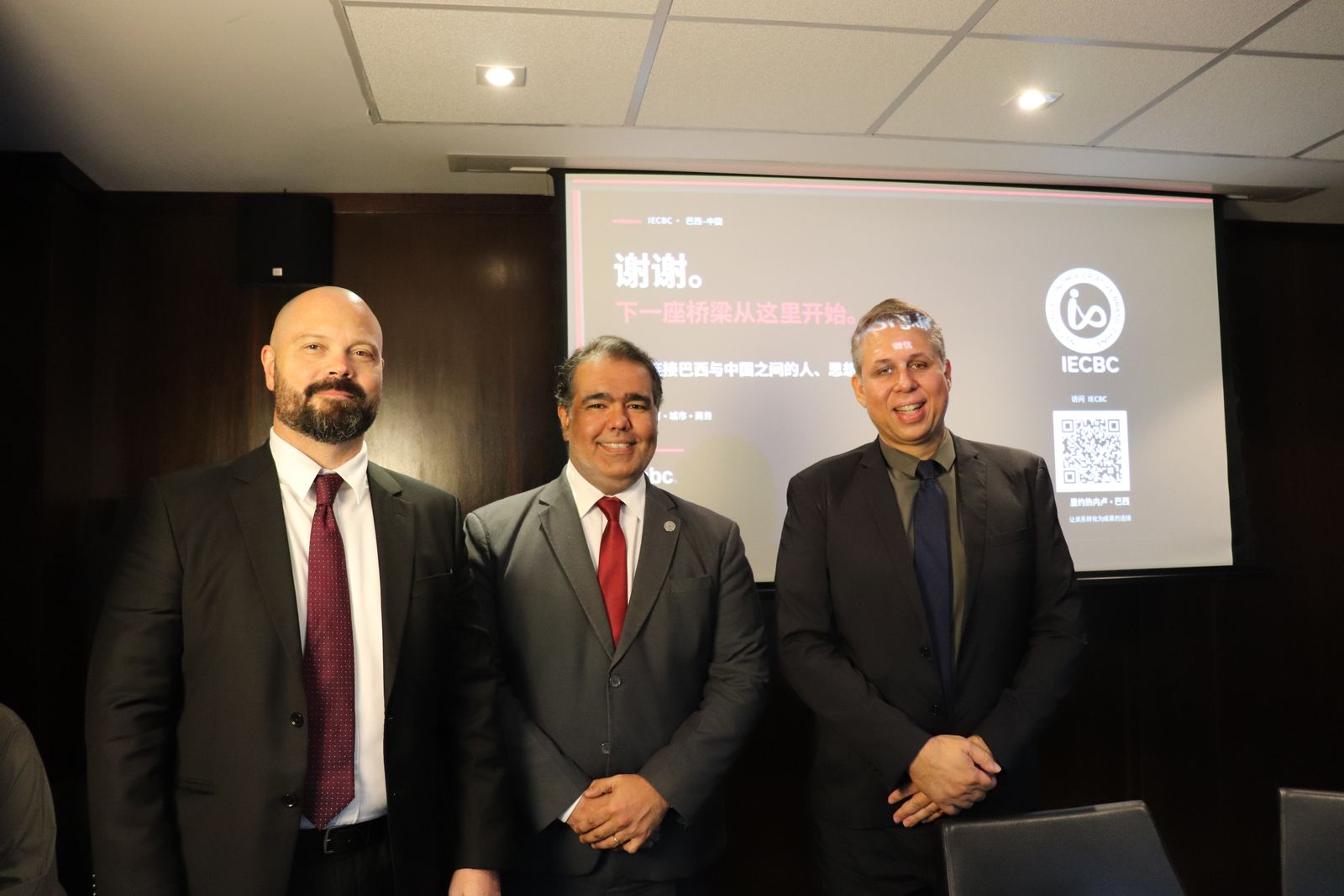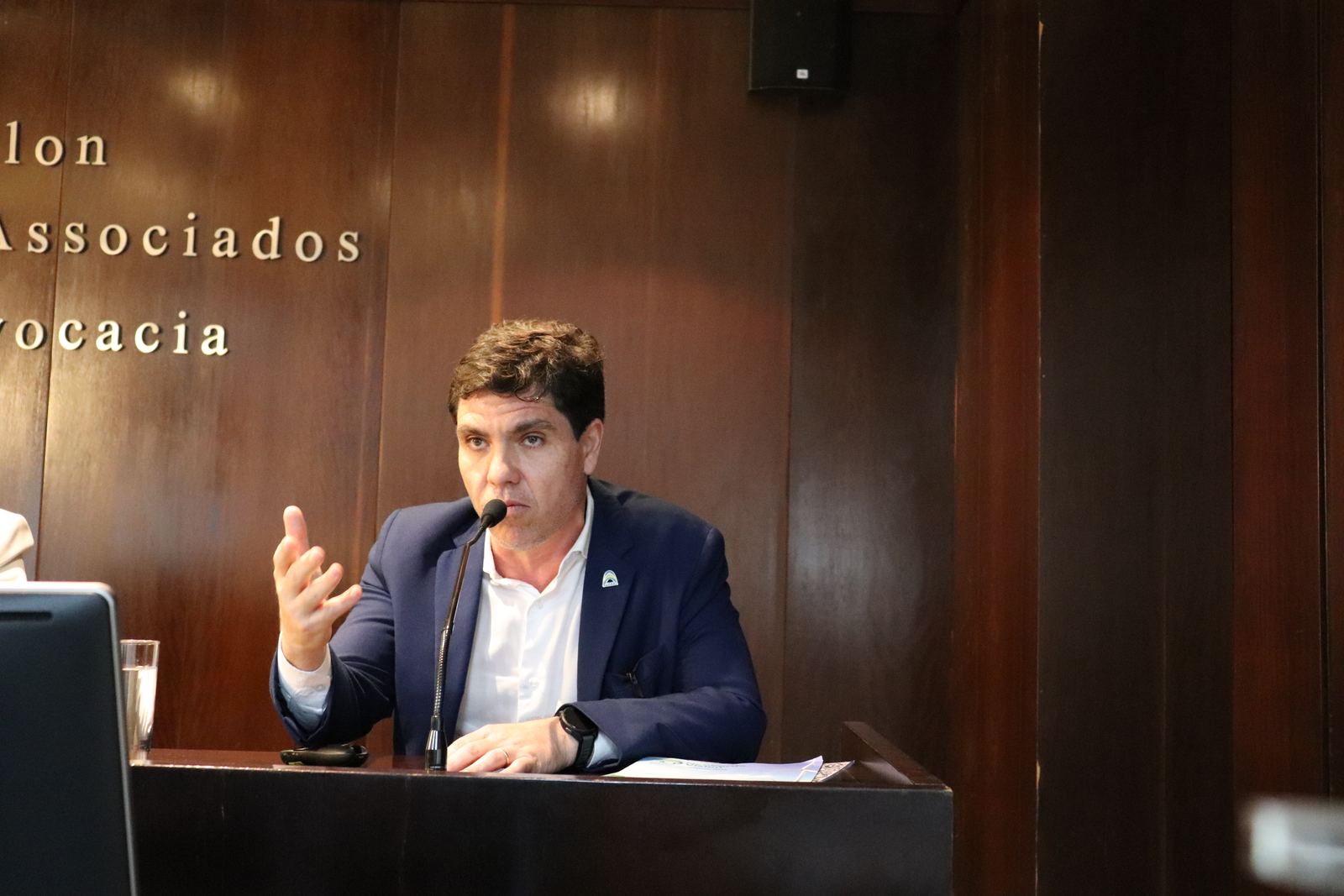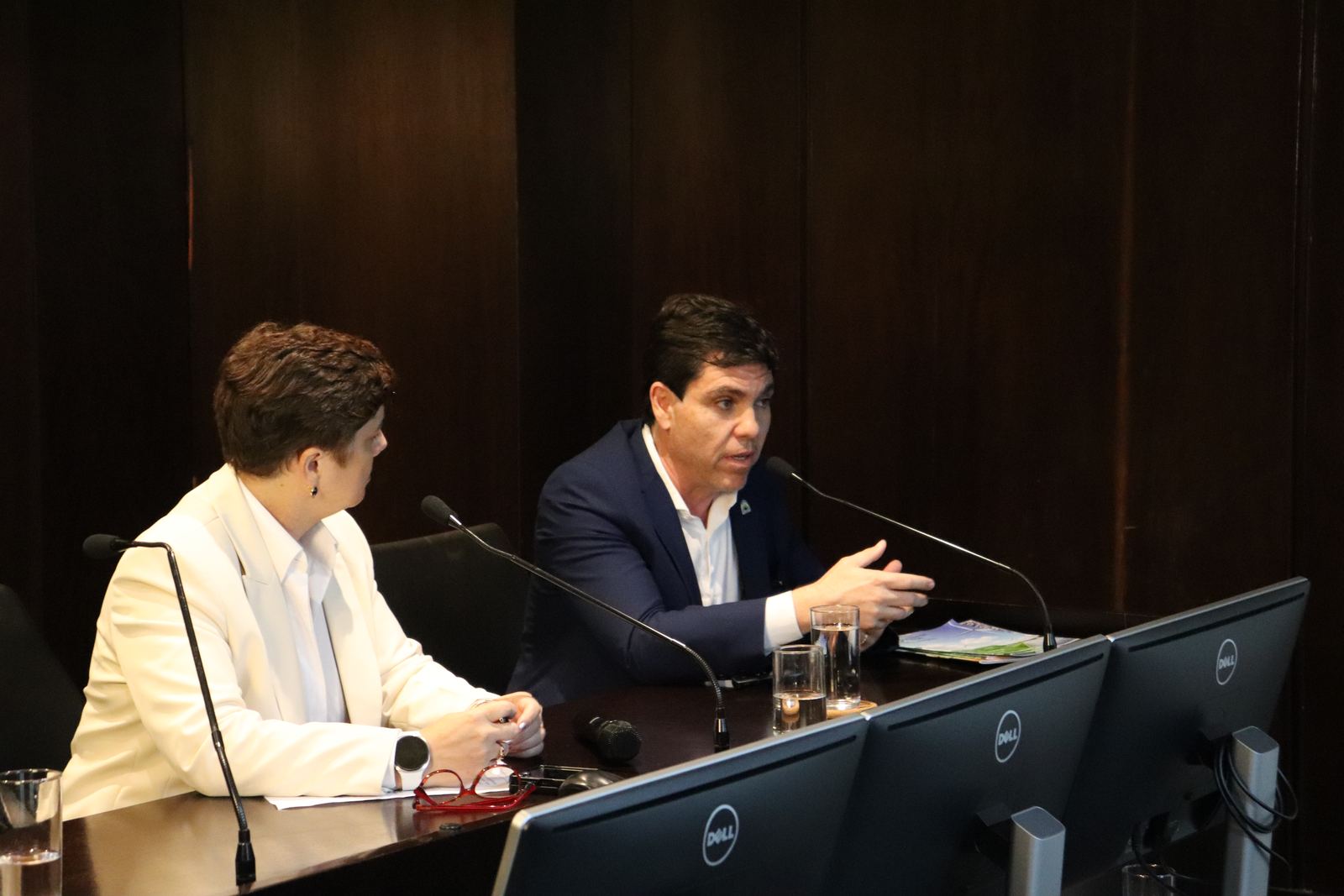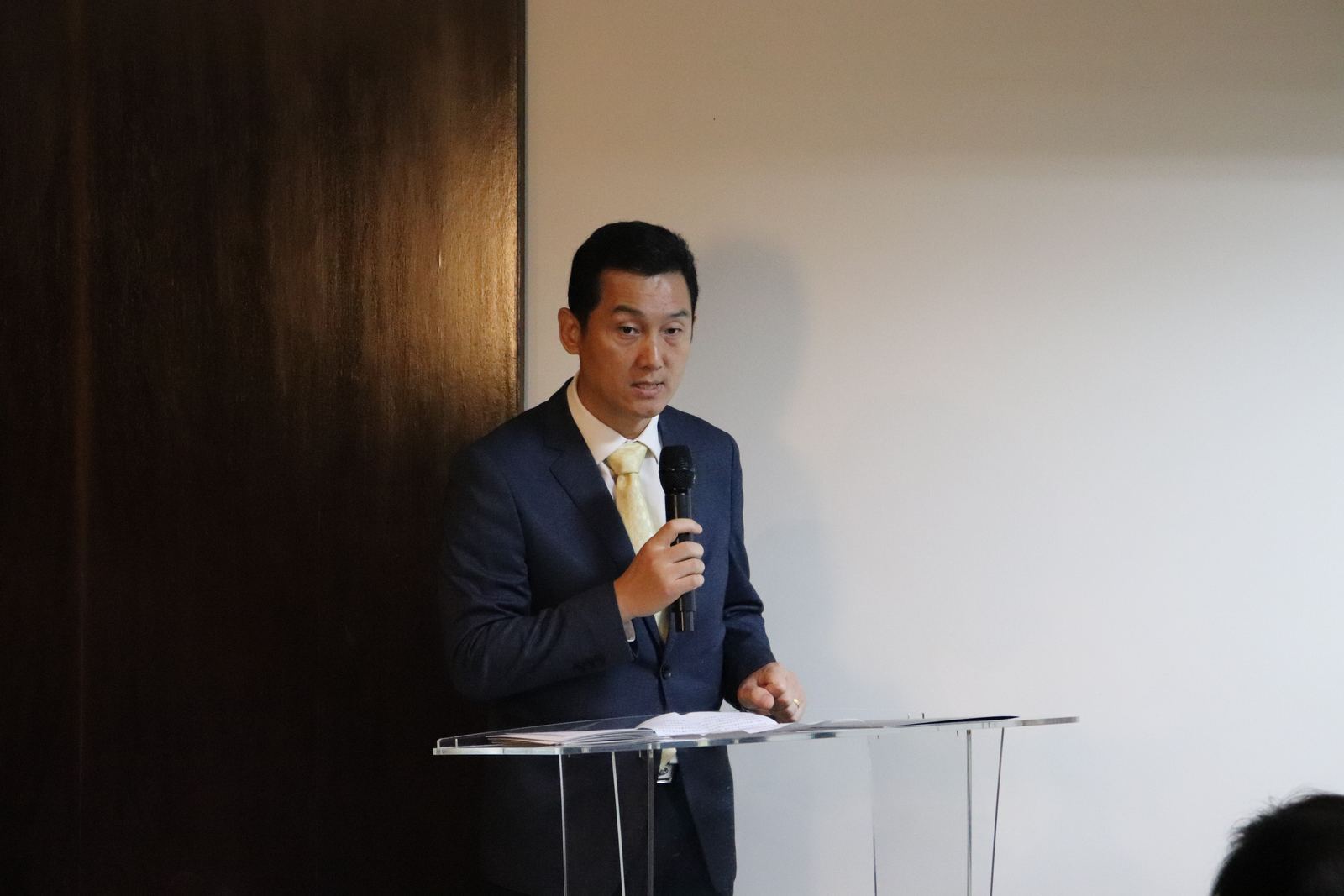
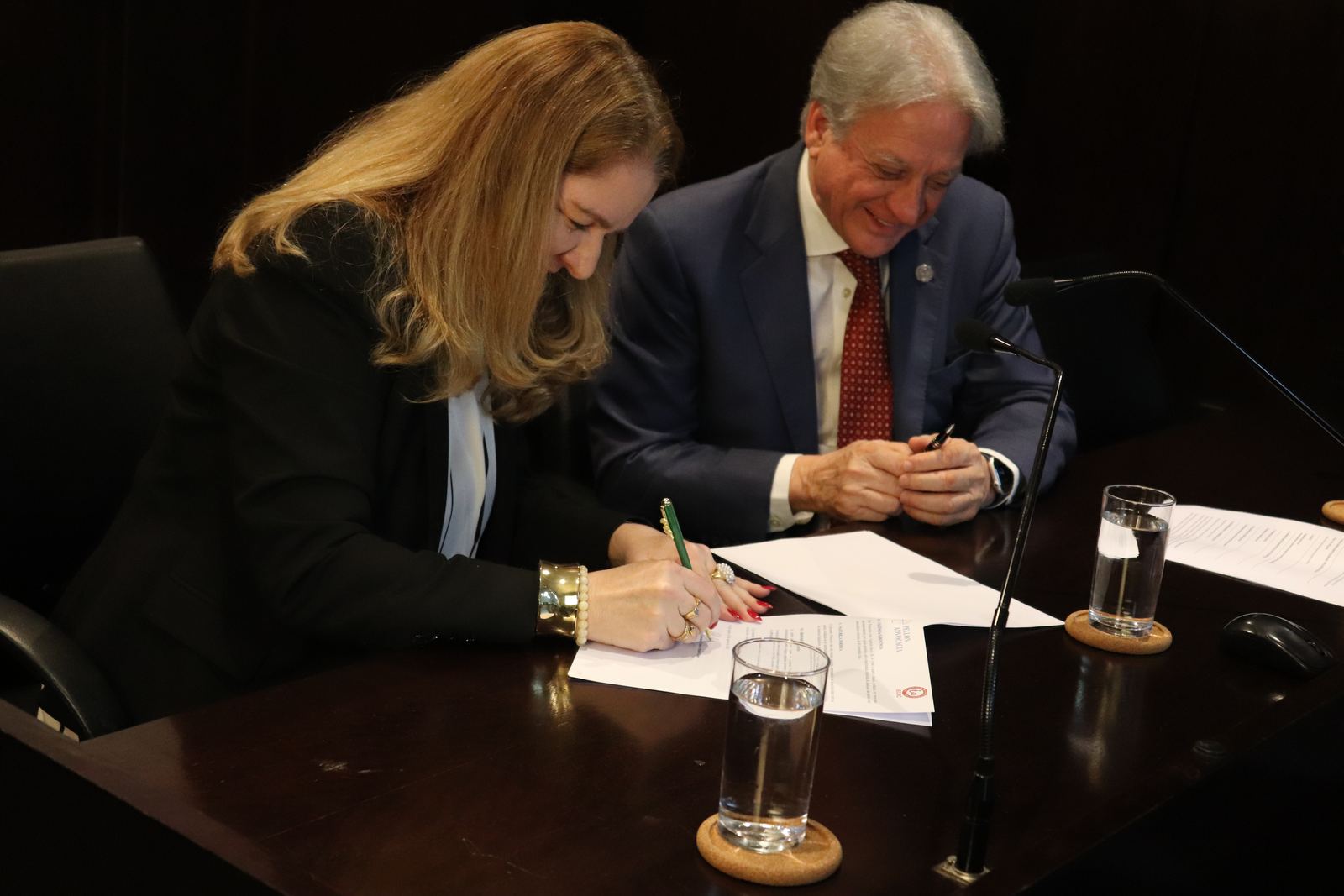
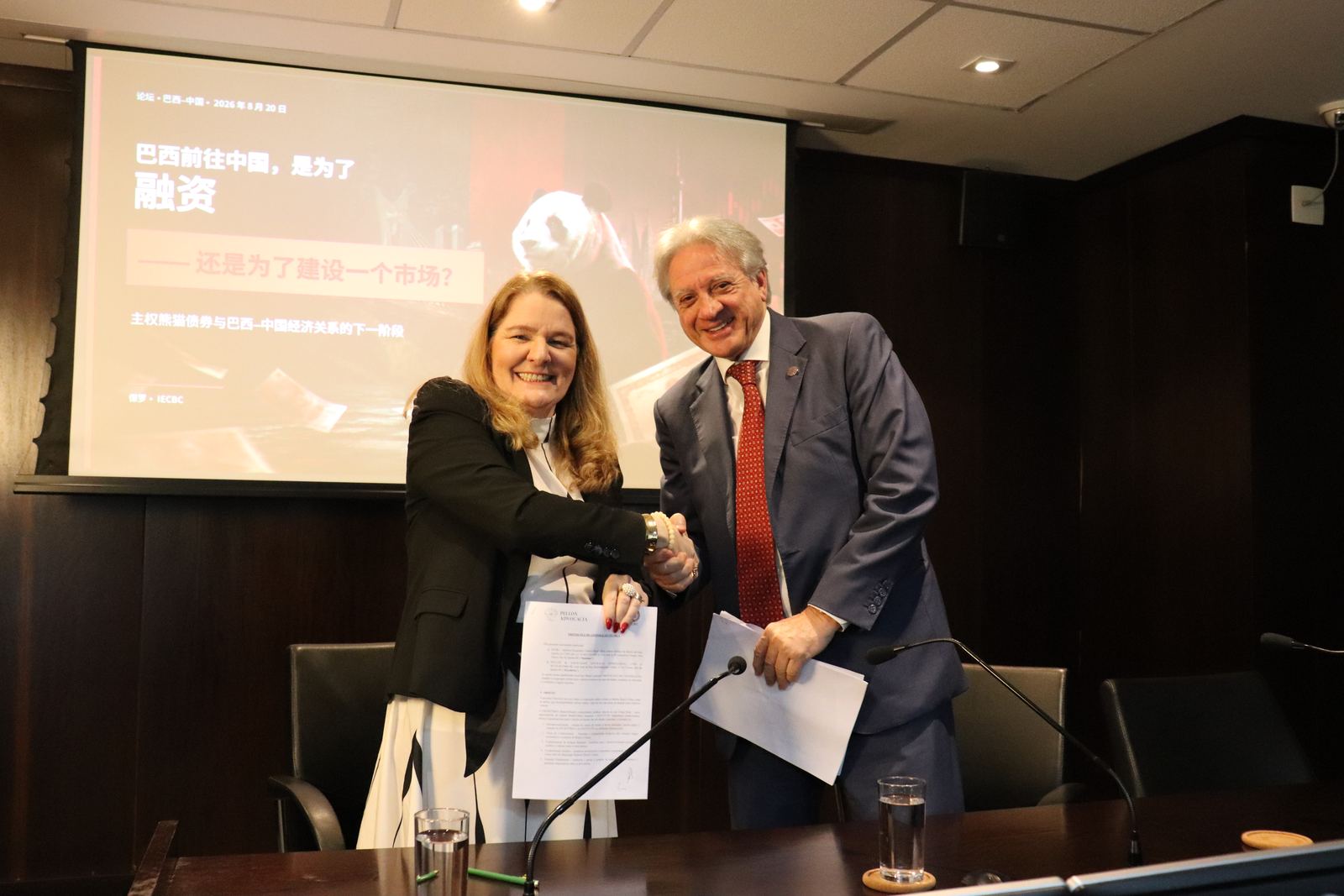
The Brazil–China Creative Economy Institute (IECBC) and Pellon Advocacia signed a Cooperation Agreement on 20 August 2026, at the law firm's offices. The meeting established a new front of institutional collaboration and brought to the table a strategic question for the bilateral relationship: how to bring the financial dimension closer to the scale already reached by trade between Brazil and China.
In his speech, Leandro Su, Vice President of IECBC, highlighted the importance of personal relationships for cooperation between the two countries. “Before bringing companies together, we need to bring people together,” he said.
For Su, building lasting partnerships depends on trust cultivated over time. “Trust does not come from a document. It comes from personal interaction, respect and credibility built over time.”

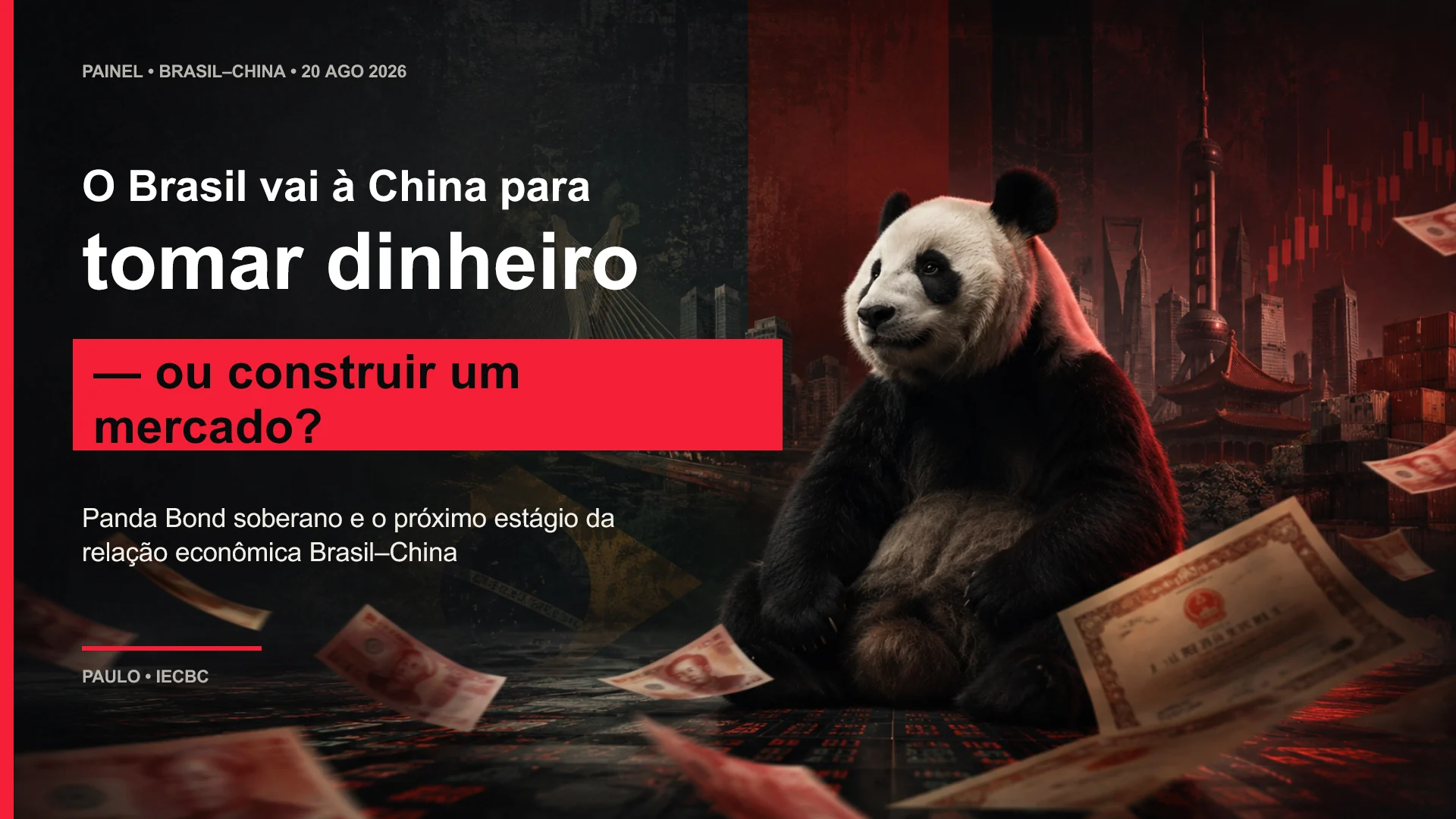
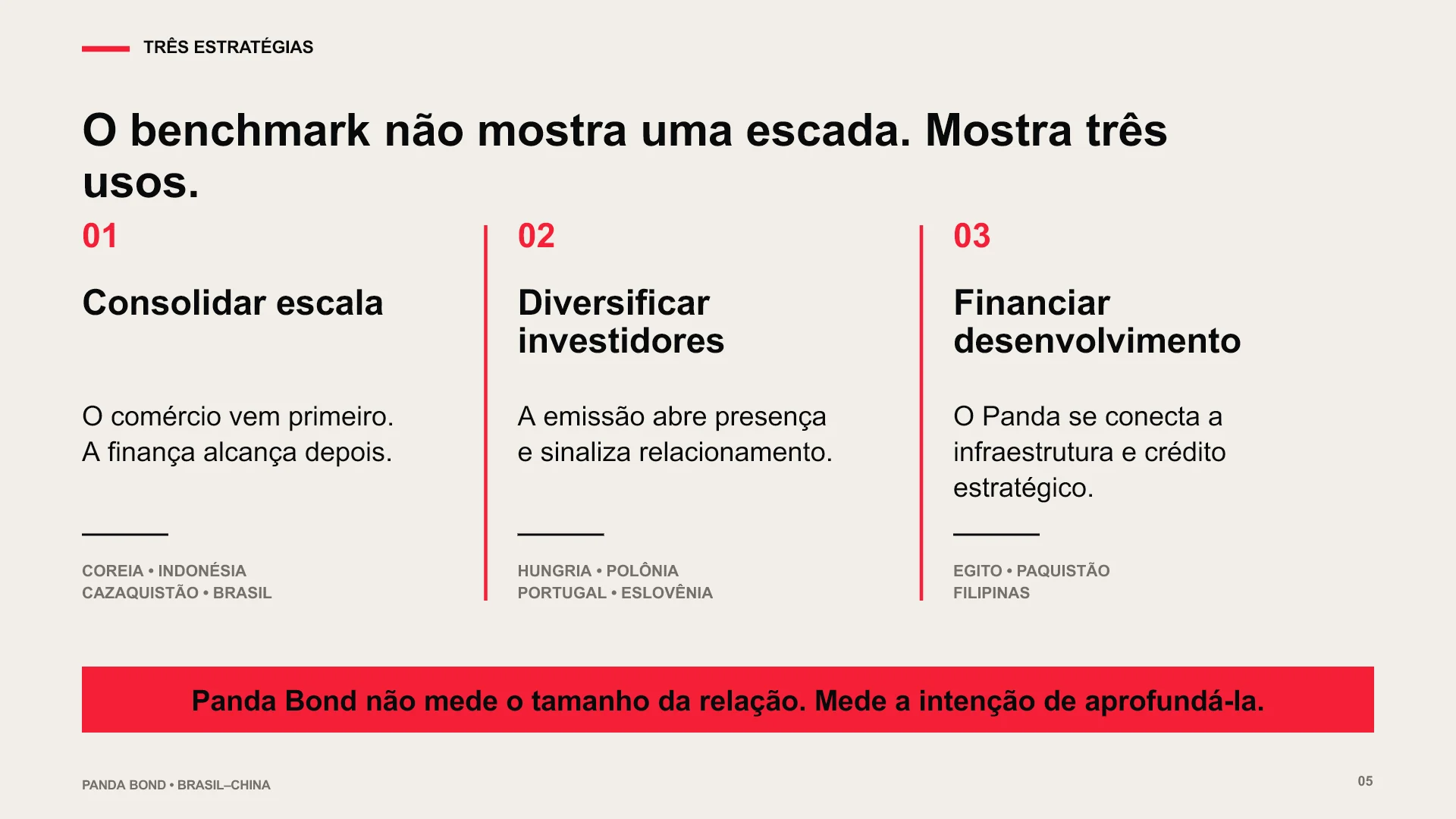
During the programme, Paulo Alves, of IECBC, presented a reflection on Panda Bonds, securities issued by foreign entities in China's domestic market. The question that guided his presentation was direct: is Brazil going to China to raise money, or to build a market?
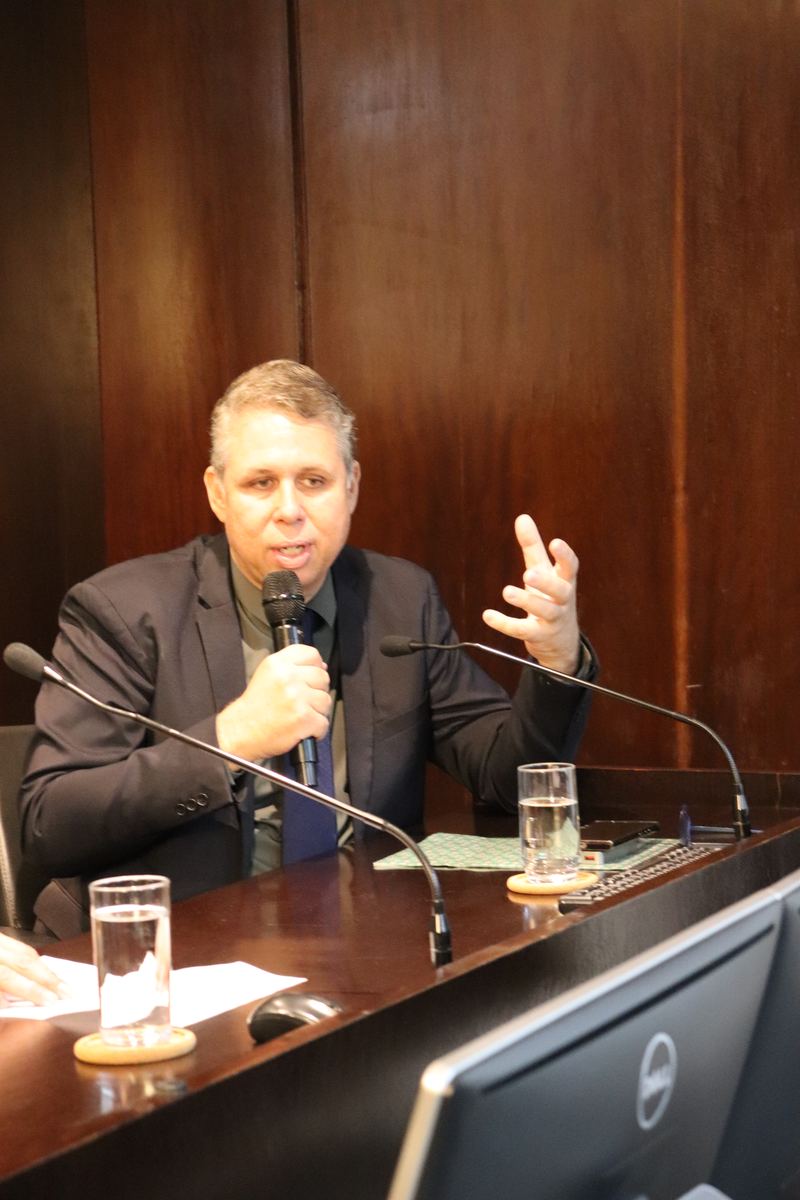
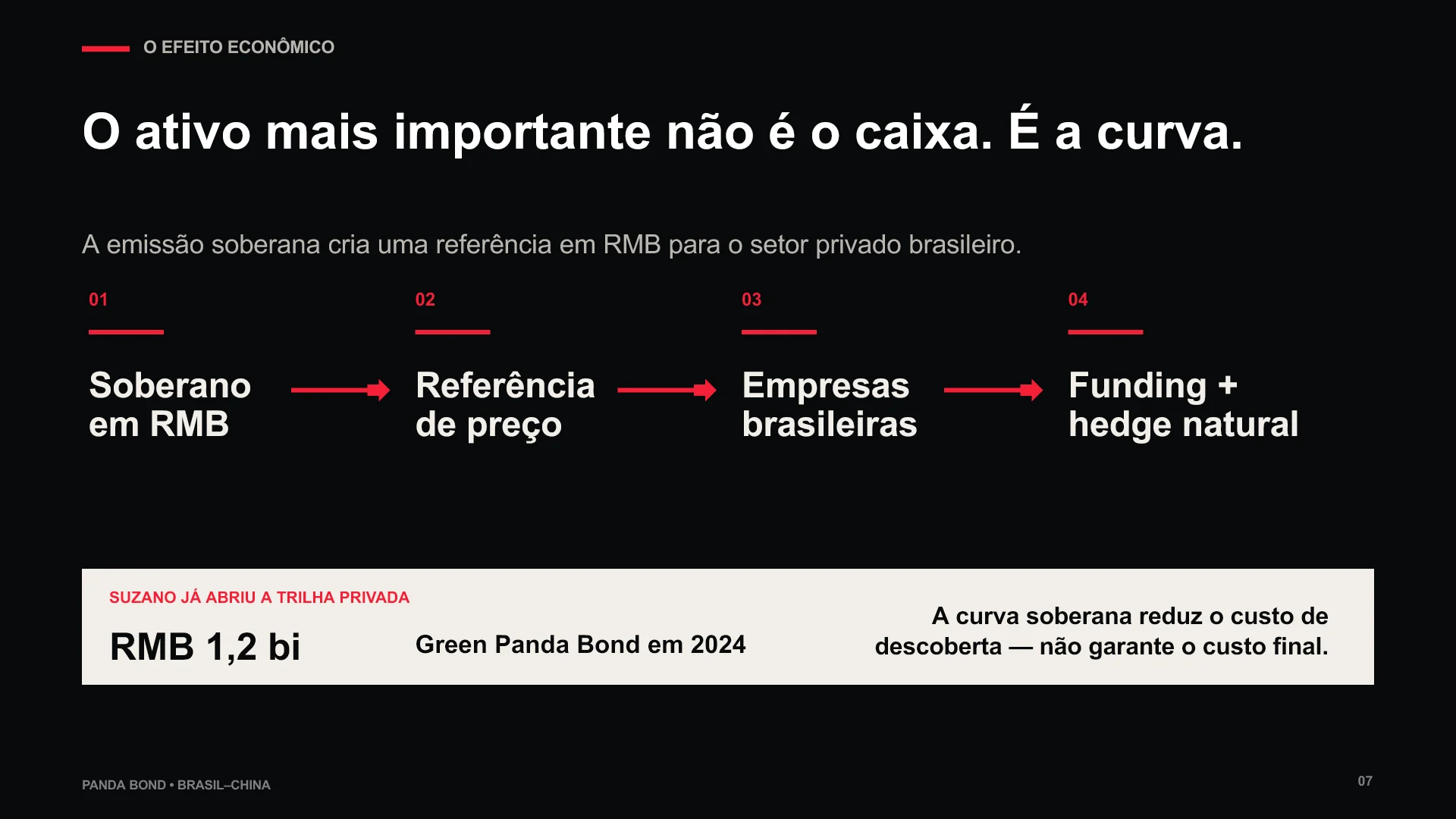
The analysis presented at the meeting highlighted that a sovereign issuance may have effects that go beyond the money raised in the debut. By creating a price reference in renminbi, it may help broaden Brazilian companies' access to investors and sources of financing in China.
What is a Panda Bond?
A Panda Bond is a debt security denominated in renminbi (RMB), the Chinese currency, issued in the mainland Chinese market by a foreign entity. Governments, companies and financial institutions may use this instrument, subject to the rules applicable to each transaction.
In practice, the issuer raises funds from investors in that market and takes on payment obligations in the currency of the issuance. For a company, its convenience depends on the total cost, the maturities and the compatibility with its revenues and expenses.
The Brazilian announcement and the stage of the operation
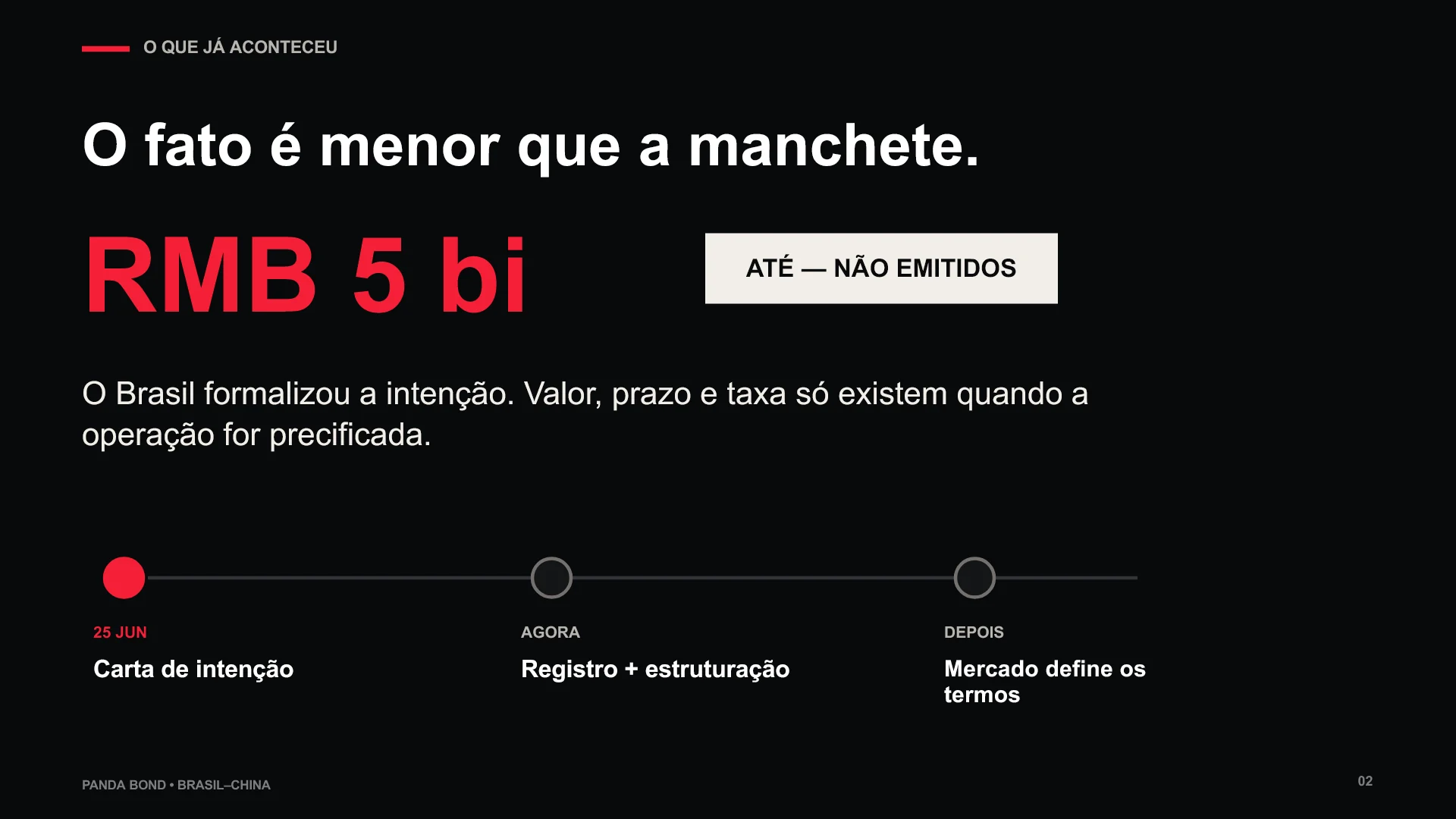
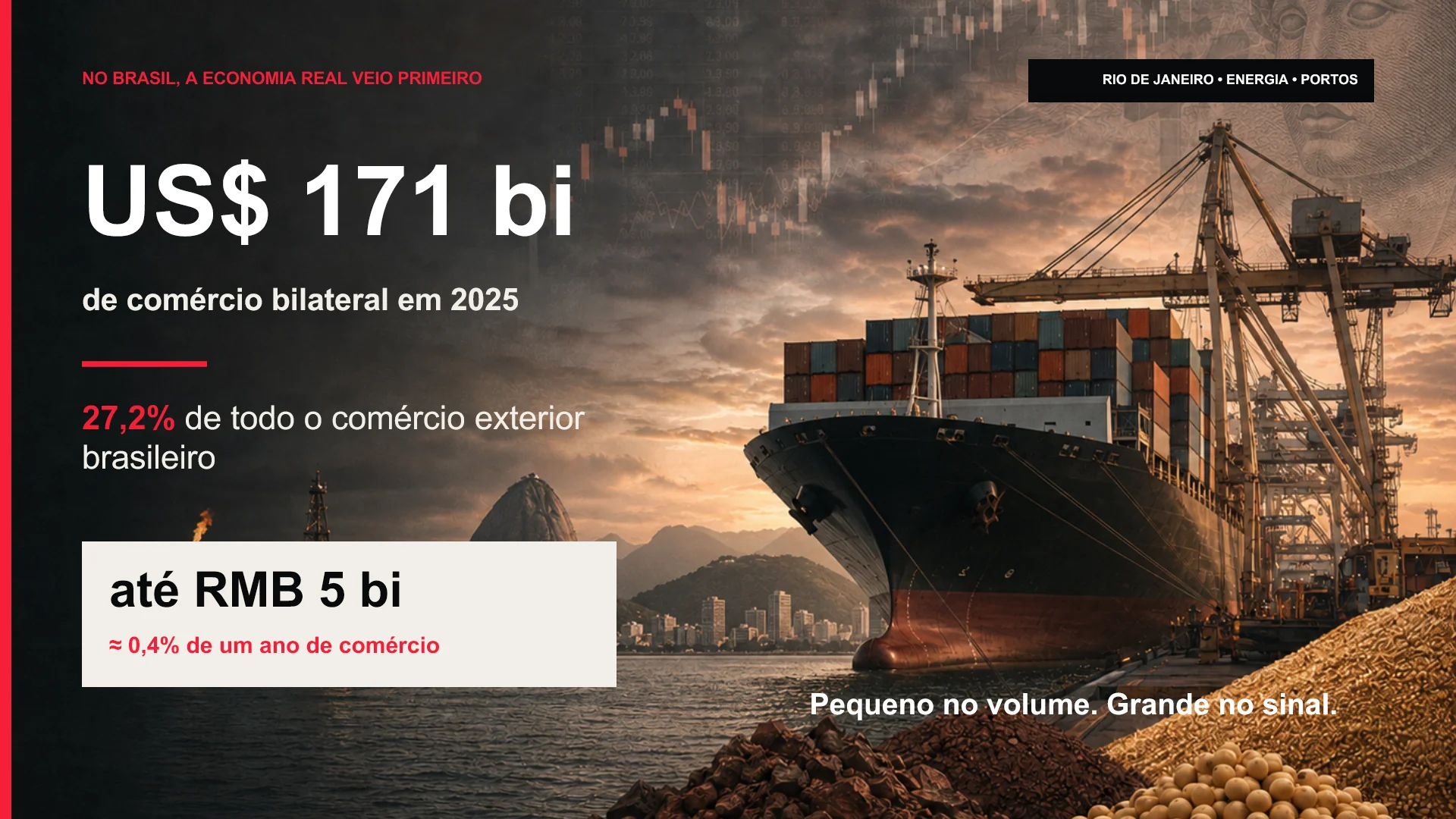
The August presentation used as its reference the intention to issue up to RMB 5 billion announced in June. In an interview with Reuters published by CNN Brasil on 25 June 2026, the Minister of Finance, Dario Durigan, described that amount as an intended ceiling for the debut, with no definitive volume yet.
It is important to distinguish that announcement from a completed fundraising. The effective terms of an offering, including volume, maturity and remuneration, depend on the necessary approvals and on market conditions.
An update issued after the event reinforces that distinction: on 12 September, InvestNews reported that the possible window for the debut lay between the end of September and October, still subject to approvals and favourable conditions. The report mentioned an estimate of around RMB 10 billion. These are references released at different moments, and not the final results of an issuance.
Why may a sovereign reference matter to companies?
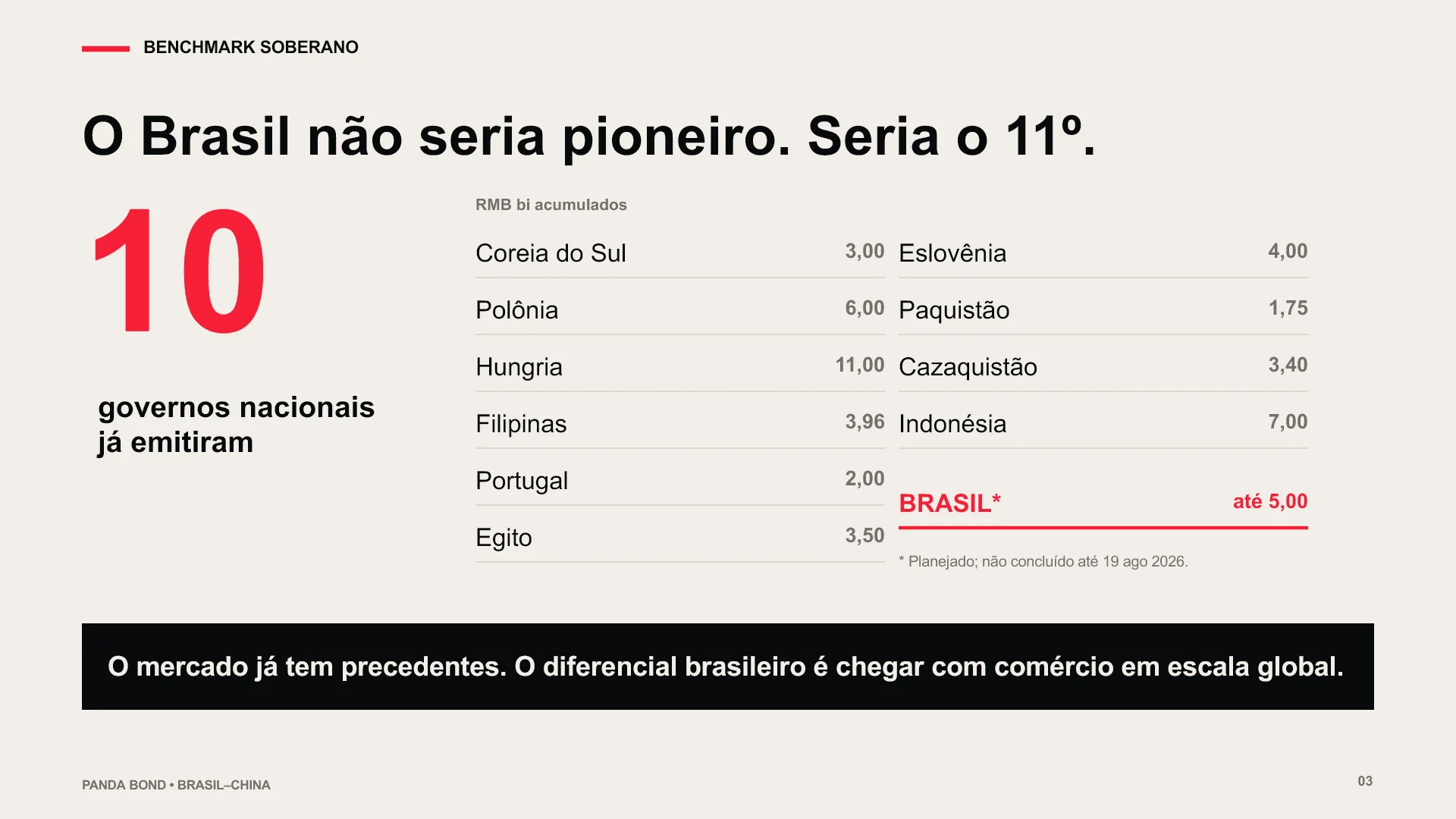
In the analysis presented by Paulo Alves, the strategic contribution lies in forming references for future transactions. An issuance by the Brazilian government in renminbi may offer investors a parameter for assessing the risk and the price of other issuers from the country.
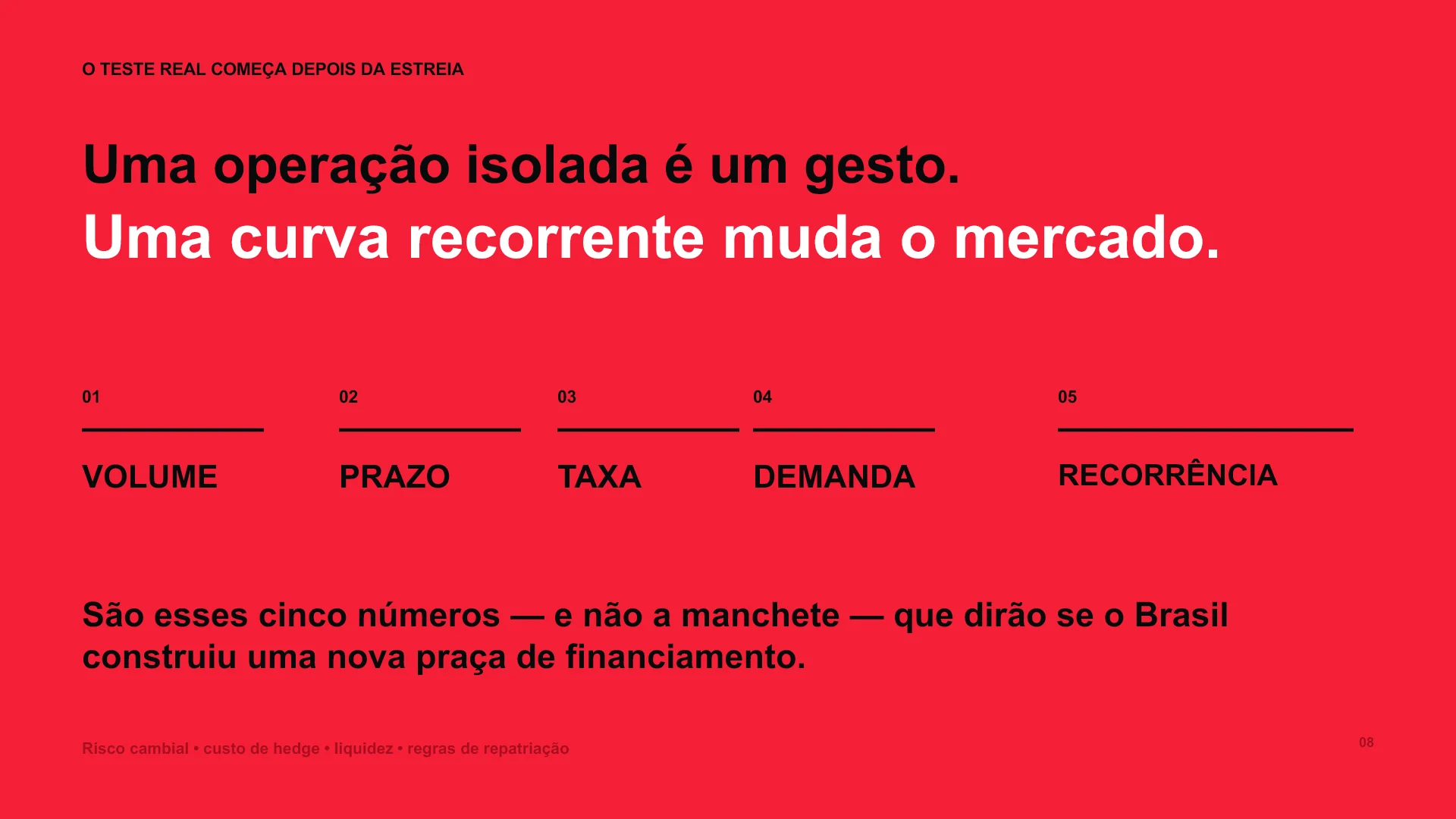
This does not determine the rate each company will pay. Credit quality, maturity, collateral, liquidity and the characteristics of each transaction remain relevant. Nor does a debut alone constitute a complete yield curve: recurrence and the offering of different maturities help build that reference over time.
For companies with cash flows in renminbi, raising funds in the same currency may allow an alignment between revenues and obligations, contributing to a natural hedge against exchange rate swings. Doing business with China does not, on its own, ensure that protection: the currency and the timing of payments must be observed.
Corporate experience already exists
The Brazilian corporate market already has a precedent. According to Suzano, the company raised RMB 1.2 billion in November 2024 through Green Panda Bonds, with proceeds allocated to certified eucalyptus plantations in Brazil.
The example cited in the presentation shows that companies may access this market regardless of a Brazilian sovereign debut. The government's reference would be an additional instrument to support the assessment of new transactions.
A trade relationship that already has scale
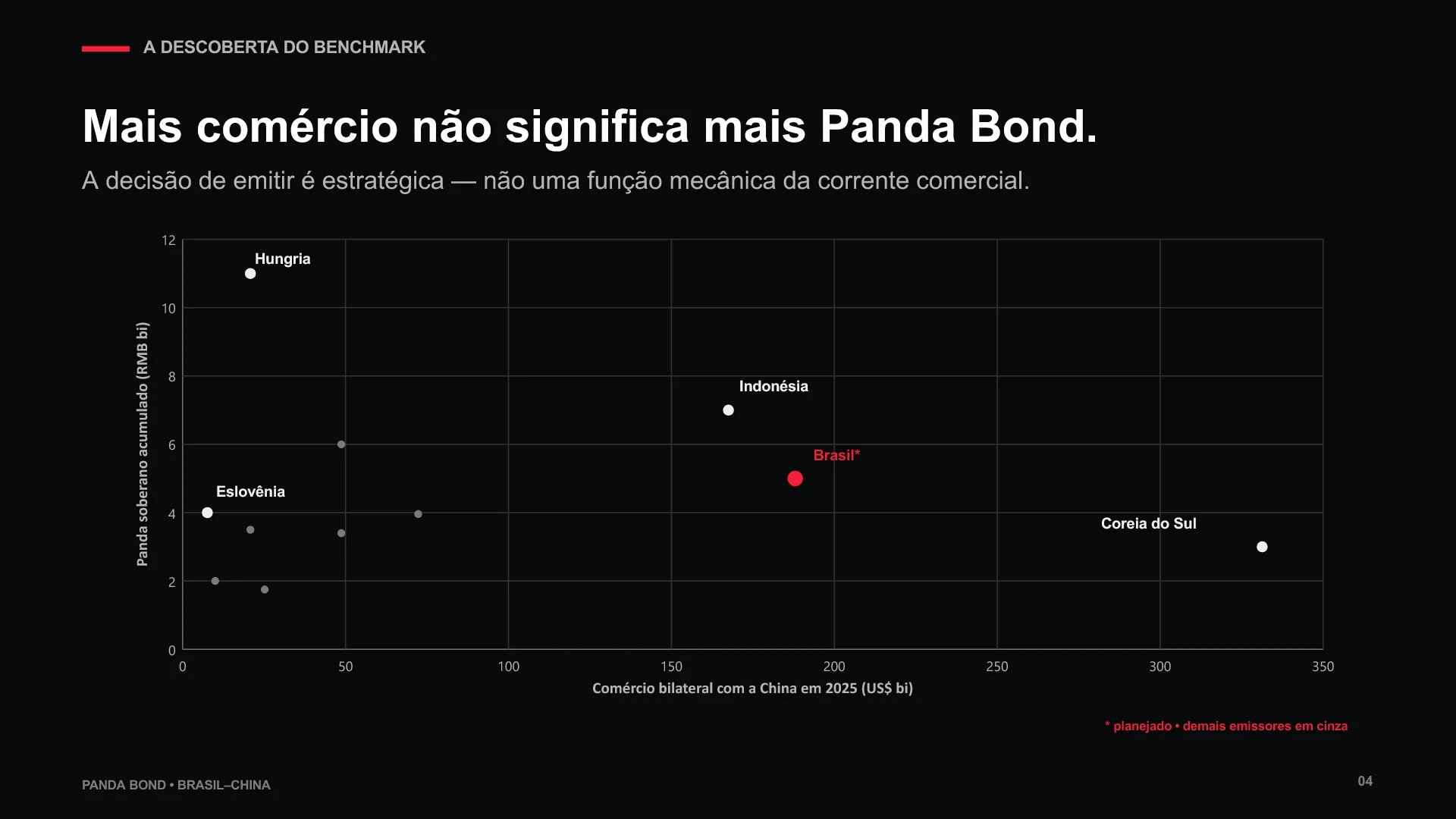
Bilateral trade reached approximately US$ 171 billion in 2025, according to a survey by the Brazil–China Business Council (CEBC) with data from the Ministry of Development, Industry, Trade and Services. The figure combines exports and imports of goods.
That scale gives context to the discussion held at the meeting. Closer financial ties may broaden the options available for trade relations and investments that already exist, provided that each structure suits the needs of its participants.
What to watch after the debut
The presentation highlighted five aspects to follow in a possible Brazilian issuance: volume, maturity, rate, demand and recurrence. It also stressed the need to assess exchange rate risk, hedging cost, liquidity and the rules on the use of proceeds.
A lower nominal rate in another currency does not automatically mean cheaper financing. The comparison requires considering the total cost of the transaction.
By bringing together the signing of the Cooperation Agreement and this discussion, the meeting between IECBC and Pellon opened space to bring institutional dialogue closer to concrete issues of the Brazil–China economic relationship. The question that remains is whether sovereign access to the Chinese market may become a recurring financing alternative.
Panel presentation
Panda Bond Brazil China — Paulo • IECBC, 20 August 2026. Material presented at the event, with historical references and data as of August 2026. See the update on the stage of the operation in the text of this article. Original presentation in Portuguese.