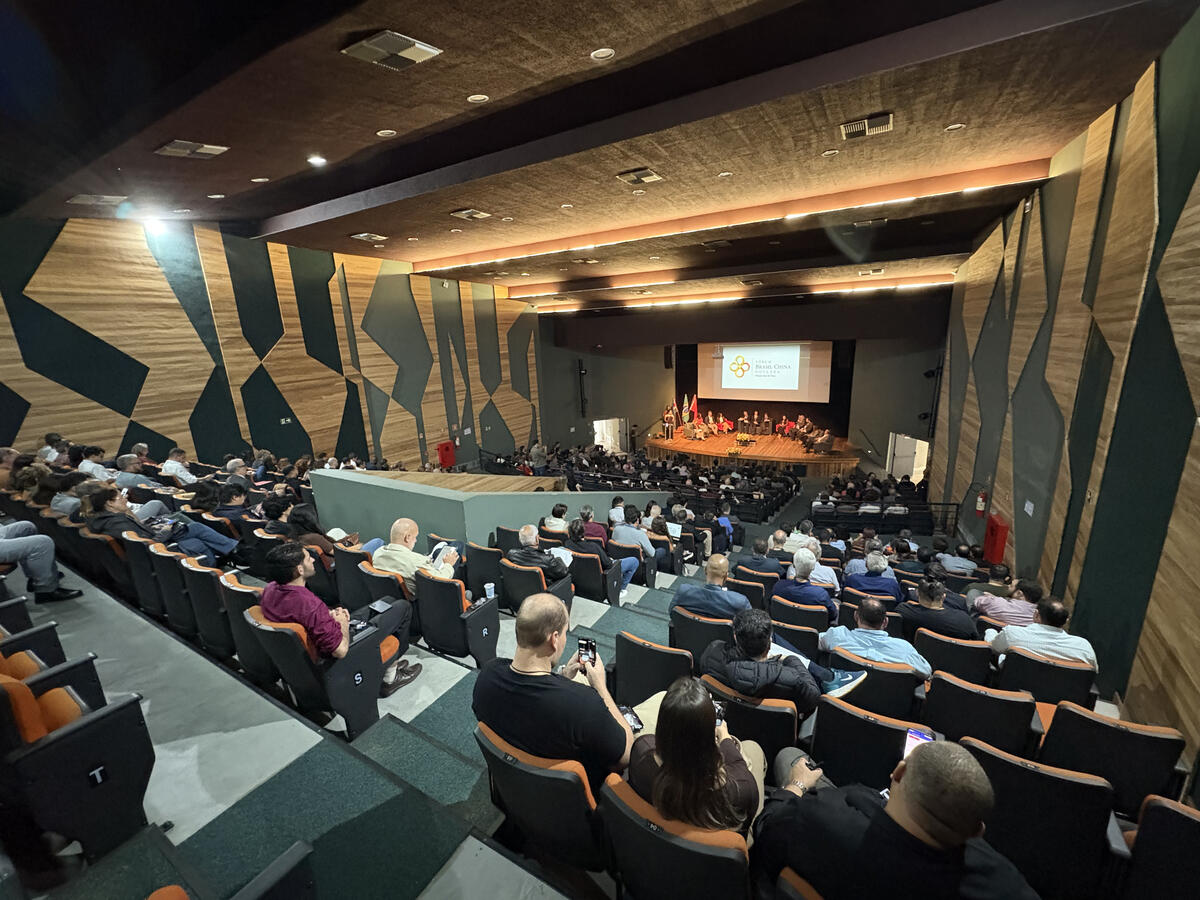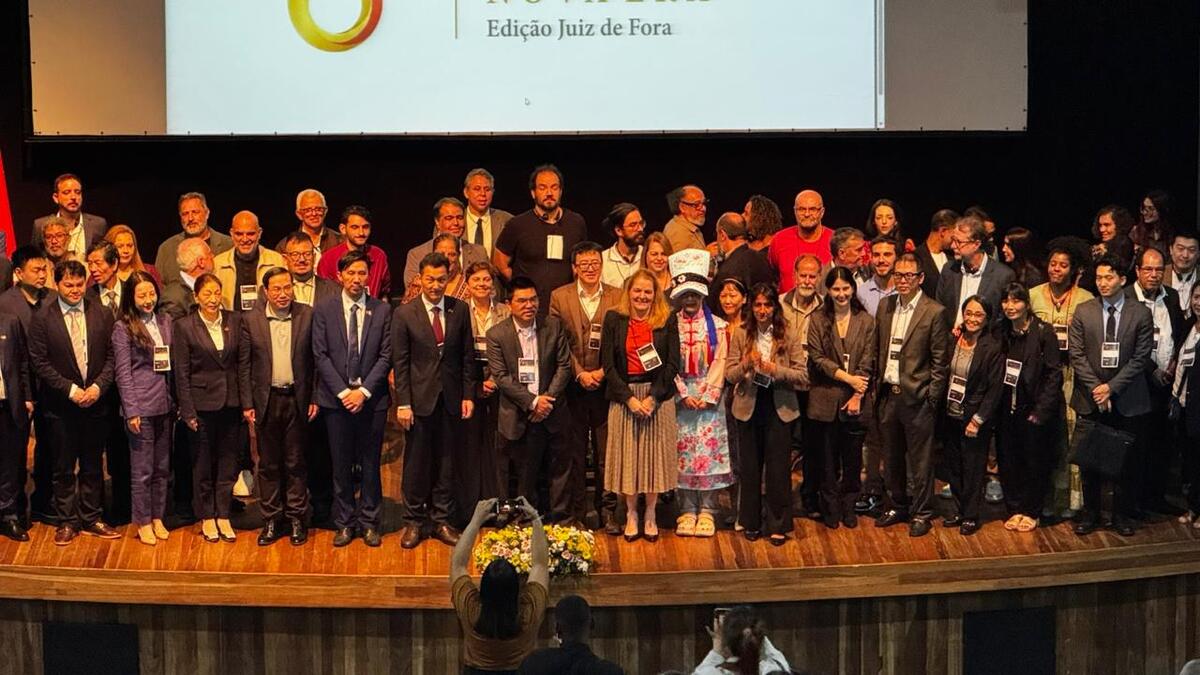
JUIZ DE FORA (MG) – In another decisive step of its internationalization strategy, the Brazil-China Creative Economy Institute (IECBC) and the Juiz de Fora City Hall held, on June 1, the Brazil-China New Era Forum — Juiz de Fora Edition. The event brought together more than 300 representatives from government, the productive sector, academia, and Brazilian and Chinese companies, turning the city — for one day — into the capital of Sino-Brazilian dialogue in Brazil's interior.
Held with the institutional support of the Consulate-General of the People's Republic of China in Rio de Janeiro, the Juiz de Fora Commercial and Business Association (ACEJF) and the Federal University of Juiz de Fora (UFJF), the Forum was part of the official program for the city's 176th anniversary. The choice of host carries strategic symbolism: located at the crossroads of Rio de Janeiro, São Paulo and Belo Horizonte, Juiz de Fora stands as one of the main industrial and logistics hubs of Minas Gerais and a decisive transport node in Brazil's Southeast.
**Bridges of cooperation for strategic sectors**
Opening the event, IECBC president Cláudia Jannuzzi emphasized that the Forum's purpose is to build bridges of cooperation focused on high value-added sectors. She highlighted the strong complementarity between the two economies and the broad space for collaboration in energy transition, mineral resources, agricultural modernization and food security — areas where local governments, companies and research institutions can develop projects with demonstrative effect.
Mayor Margarida Salomão described the meeting as an extraordinary opportunity for the city and for integrated development across Southeastern Minas Gerais. For her, the Forum represents another stage of the rapprochement begun with the institutional mission to China in 2025, and the challenge now is to convert dialogue into concrete benefits for the population.
**Four fronts proposed by the Chinese Consulate**
China's commercial consul in Rio de Janeiro, Jing Yanhui, recalled that China is today the largest trade partner and a major source of investment for Minas Gerais. In his remarks, he presented four fronts to deepen local cooperation: strengthening sister-city ties as the basis for people-to-people rapprochement; using technology as a driver to build smart and resilient cities; connecting complementary vocations to consolidate regional logistics hubs; and betting on the cultural industry as a path to expand the creative economy.
**Education, science and regional vocation**
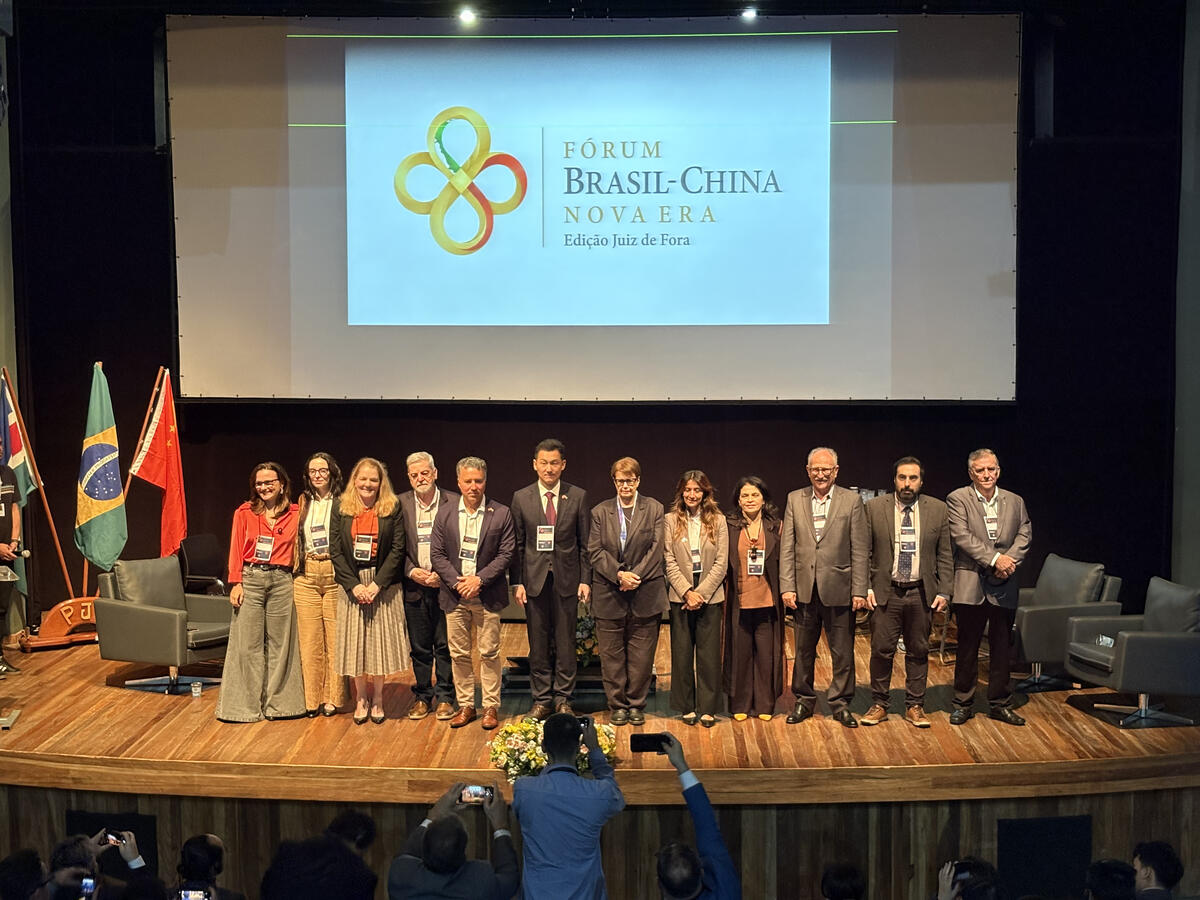
The institutional opening panel brought together political, business and educational leaders from Juiz de Fora and across the region: Mayor Margarida Salomão and Vice-Mayor Marcelo Detoni; Consul Jing Yanhui; ACEJF president Aloísio Vasconcelos; the mayors of Leopoldina, Pedro Junqueira; Viçosa, Ângelo Chequer; and Barra do Piraí, Kátia Miki; Federal Deputy Ana Pimentel; UFJF Rector Girlene Alves da Silva; IF Sudeste MG Rector Valdir José da Silva; and city councilor Letícia Delgado.
Federal Deputy Ana Pimentel argued that Brazil-China cooperation must move beyond agricultural and mineral commodities to reach technological innovation, knowledge production and talent development — an agenda for which Juiz de Fora and its surroundings have privileged conditions, given the density of teaching and research institutions. Representatives of UFJF and IF Sudeste MG presented experiences in international cooperation, talent training and research transfer, expressing interest in expanding exchanges with China.
From the business side, ACEJF president Aloísio Vasconcelos shared impressions from the 2025 mission to China and emphasized the seriousness and commitment that have shaped the relationship with Chinese companies. Referring to the city's reconstruction after the heavy rains of February, he observed that China's recovery experience can inspire Juiz de Fora to overcome its challenges.
**Three thematic tracks and the presence of global giants**
The program was organized around three tracks: "Trade, investment and new connections for development"; "Education, technology, digital connectivity and cooperation platforms"; and "Creative economy, audiovisual and cultural cooperation".
Debates on infrastructure, logistics and productive integration brought together representatives of companies such as COSCO Shipping, MRS Logística, Multiterminais, Anjun Express, U&M, PowerChina and Sebrae, focused on logistics connectivity, investment expansion and strengthening of productive chains. The technology, education and innovation track featured ZTE Corporation, CLACTP, BCI/CBCICT and CRITT/UFJF, which presented possibilities for collaboration between institutions of both countries. The culture, audiovisual and creative economy panel gathered Cultural Bridge, the UFJF Cinema and Audiovisual program, Grupo Otzi JF, Moinho, Polo Audiovisual JF and Estação das Artes, highlighting culture as an instrument of rapprochement between Brazil and China.
**From Yueyang to the interior: an agenda in the making**
The Juiz de Fora Forum is one of the outcomes of the business mission to China carried out in October 2025, which brought the public sector and private initiative closer to the Asian market. As a development, in November 2025 a cooperation agreement and a sister-city agreement were signed between Juiz de Fora and Yueyang, expanding possibilities for economic, technological, educational and cultural exchange.
The Minas Gerais edition gave continuity to an initiative that had its first realization in March 2026, at the headquarters of the Federation of Industries of the State of Rio de Janeiro (FIRJAN), and is consolidating itself as a permanent platform for articulation between local governments, companies, universities and civil society institutions from both countries.
**Coverage in Brazil and China**
The event had wide media coverage. In Brazil, it was reported by outlets such as Diário do Comércio, Folha JF, RCWTV, Novojornal, Primeiro a Saber and Jornal Panorama Minas, in addition to mentions in the city's official agenda and local columns. In China, People's Daily Online (人民网), the international channel of the People's Daily, published an article about the Forum, highlighting the arrival of Sino-Brazilian cooperation in cities of Brazil's interior; the coverage was echoed by Nanmei Qiaobao (南美侨报网), aimed at the Chinese community in South America. The Consulate-General of China in Rio de Janeiro also officially registered the success of the event and the presence of more than 300 participants.
With the Forum, Juiz de Fora reaffirms its vocation as a strategic hub for the creative economy and international cooperation in Brazil, with IECBC as the facilitating arm to turn institutional dialogue into concrete economic and social benefits. The expectation is that the connections established at the event will translate, over the coming months, into new business, investment and partnerships between the Rio–Minas interior and China.