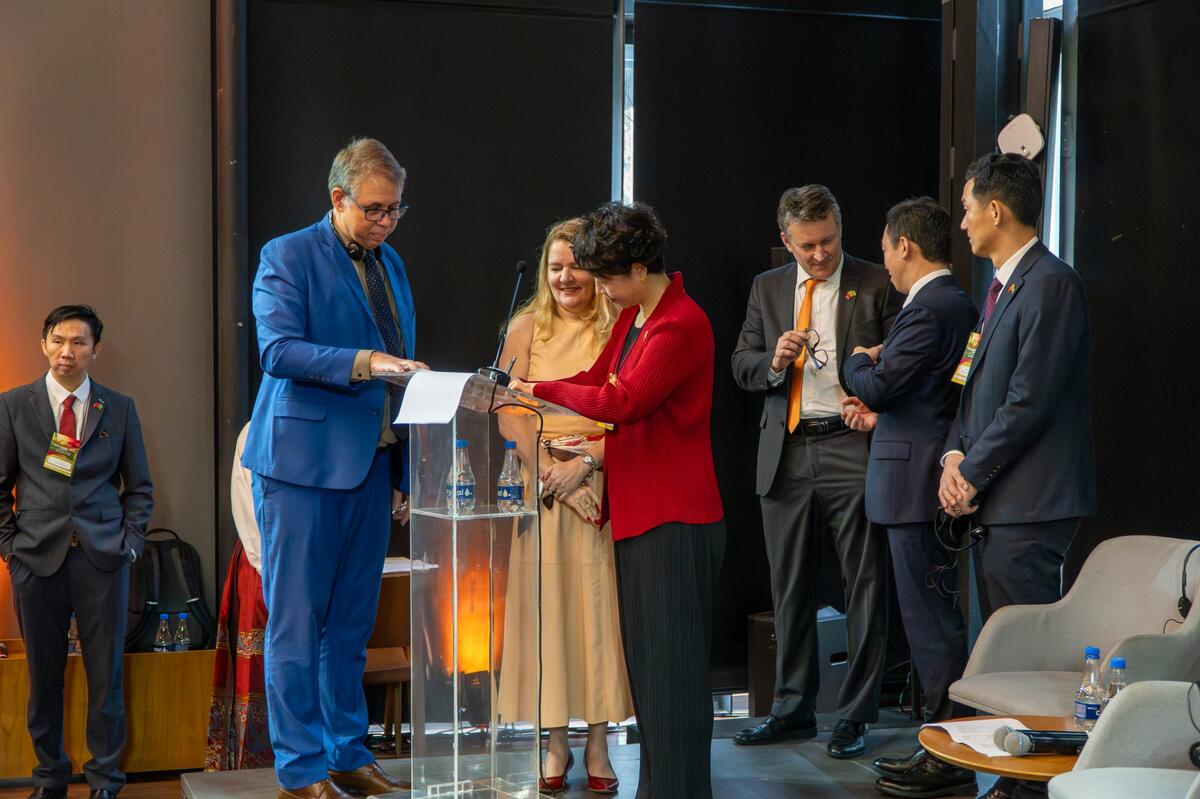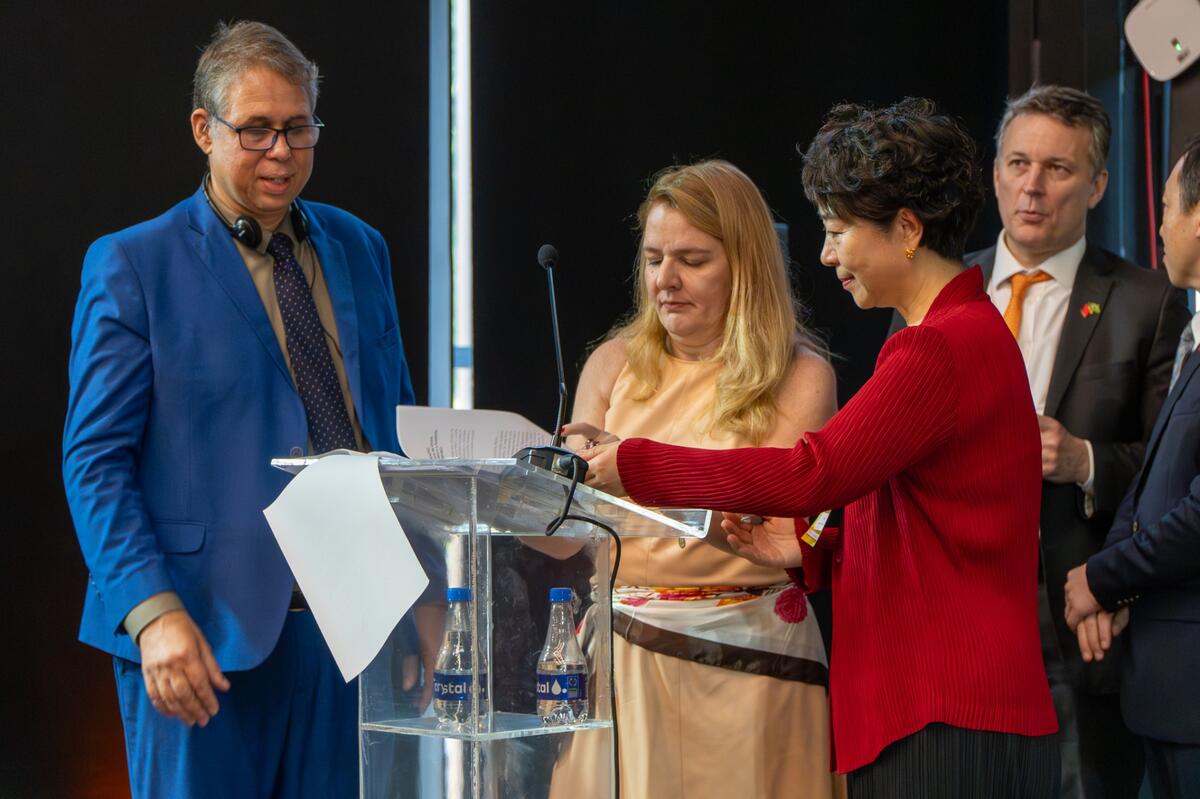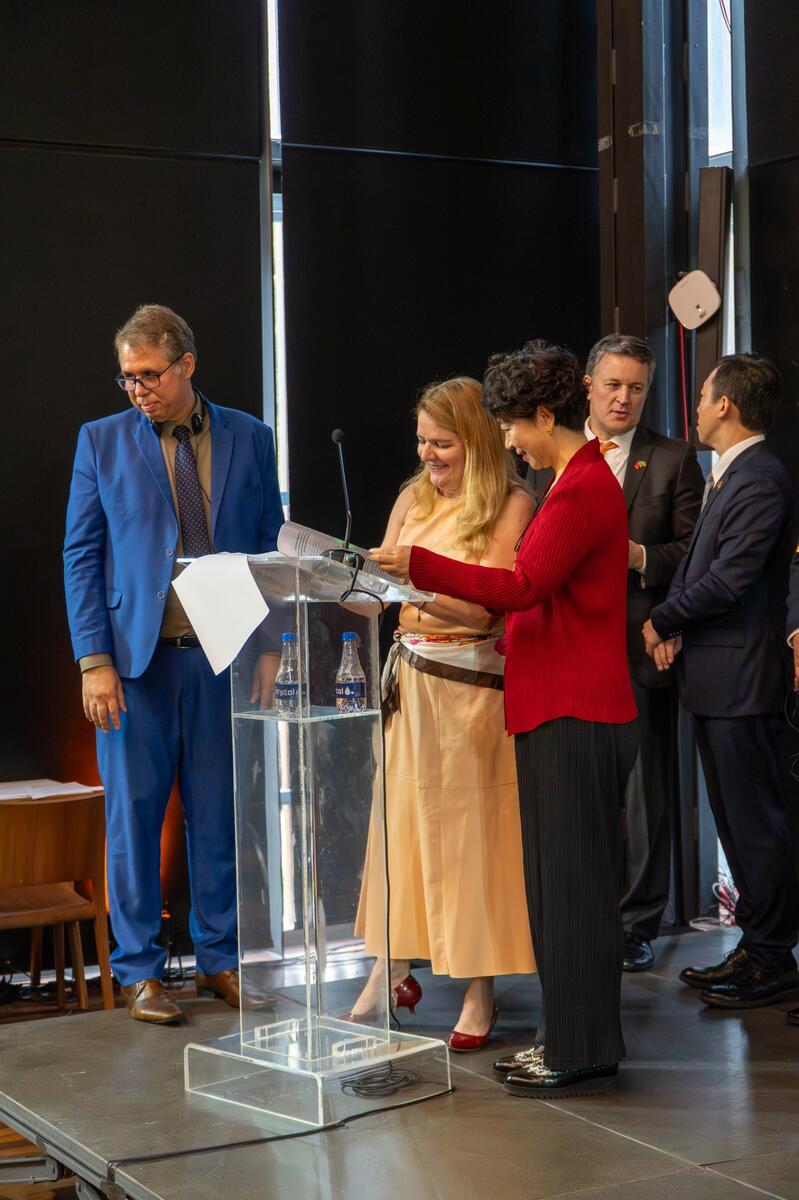
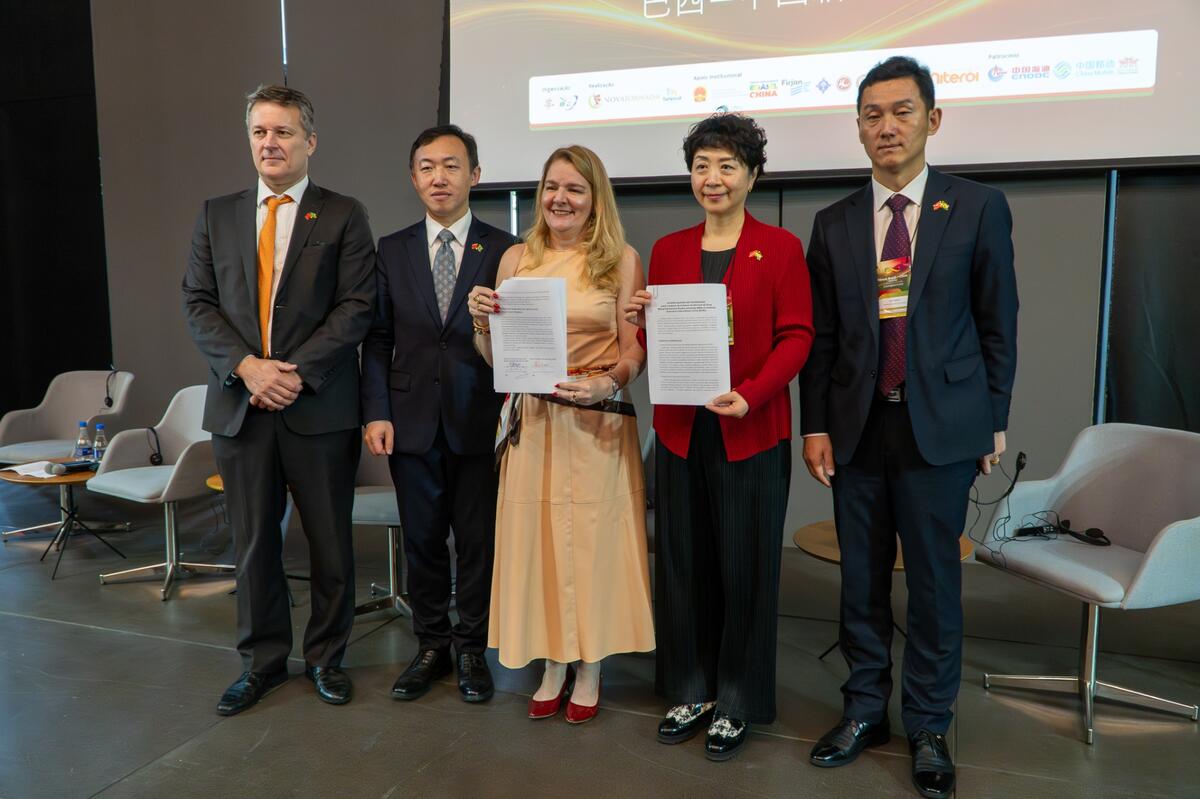
Professor Li Jiashan was one of the most prominent international figures at the Brazil–China New Era Forum — Cooperation and Innovation, held at Casa Firjan in Rio de Janeiro. With a significant role at various points in the program, she delivered the opening speech of the event, participated in the sister cities panel and also joined the Brazil–China Agenda panel, contributing strategic reflections on the direction of bilateral cooperation between the two countries in a new phase marked by innovation, institutional articulation and integration between culture, economy and services.
Her presence at the event represented not only the strengthening of high-level Sino-Brazilian dialogue, but also the consolidation of concrete bridges between institutions committed to a long-term cooperation agenda. During the Forum, a memorandum of understanding was signed between the China Service Trade Institute of Beijing International Studies University (BISU), represented by Professor Li Jiashan, and the Brazil-China Creative Economy Institute (IECBC), represented by its president, Claudia Jannuzzi.
In her opening speech, Professor Li Jiashan presented a broad and strategic reading of the current stage of relations between China and Brazil. According to her, the partnership between the two countries has already surpassed the traditional logic of commercial exchange centered on products and is now projected into a new cycle, where services trade, innovation, culture, talent development and institutional cooperation assume an increasingly relevant role.
She highlighted that services trade tends to occupy a central position in this new phase of bilateral cooperation, as it connects areas such as technology, finance, tourism, culture, logistics, education and digital services. She also emphasized the importance of digital transformation, financial cooperation and the human dimension of the bilateral relationship.
The signing of the memorandum of understanding with IECBC gave institutional form to many of the principles advocated by the professor during the event. The agreement aims to strengthen academic exchange, promote research cooperation and create new joint development opportunities between the two institutions.